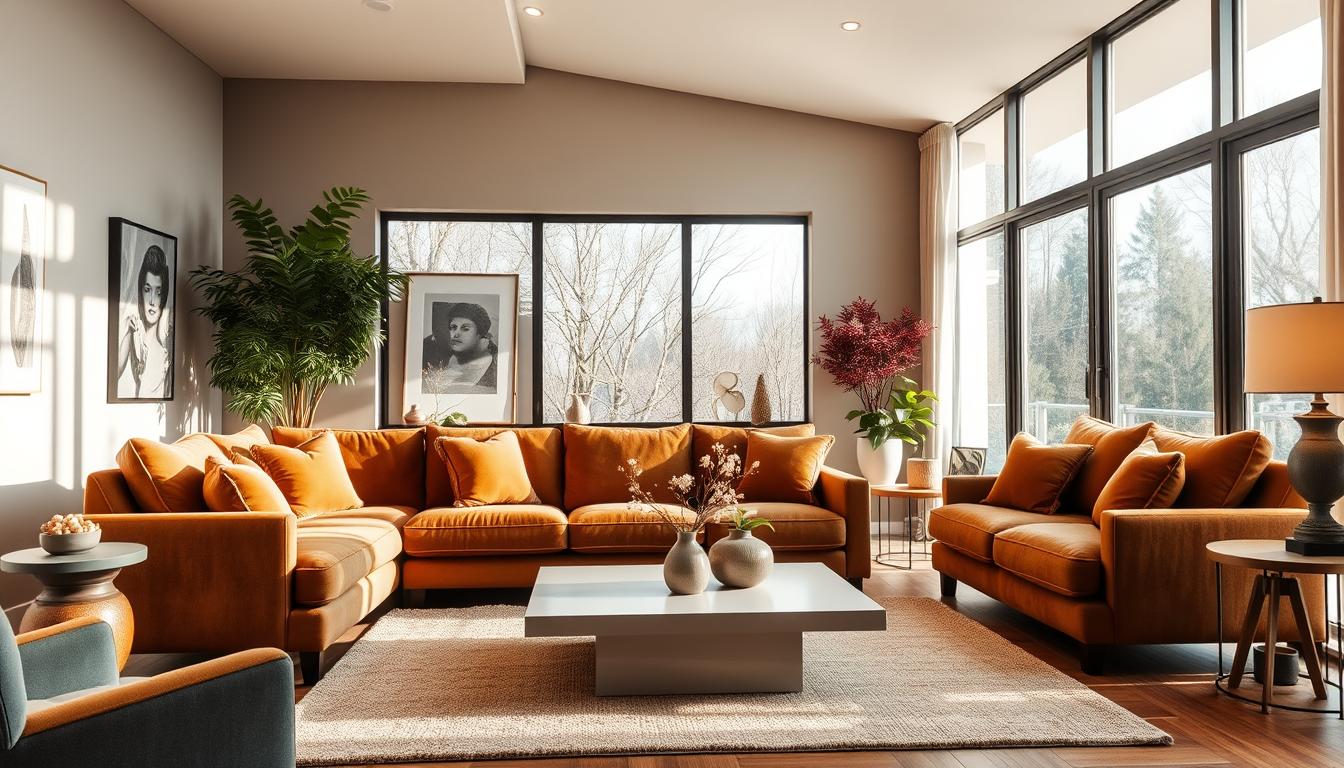


The Mediterranean region is known for its warm climate and stunning landscapes. It also has a rich cultural heritage. This has made Mediterranean-inspired homes popular all over the world.
In this guide, we’ll cover the key elements, color palettes, and decor tips of Mediterranean interior design trends. We’ll look into the history and features of this style. Our goal is to help you add warmth and elegance of the Mediterranean to your home.
Key Takeaways
- Discover the core elements that define Mediterranean-inspired homes.
- Learn how to incorporate Mediterranean color palettes into your decor.
- Explore decor tips to create a warm and inviting Mediterranean-style living space.
- Understand the history and cultural significance behind Mediterranean interior design.
- Get inspired to bring the elegance of the Mediterranean into your home.
What is Mediterranean Home Interior Design?
Mediterranean home interior design is inspired by the coastal areas of the Mediterranean. It brings warmth and hospitality to any home. This style uses natural materials, vibrant colors, and architectural elements that reflect the region’s rich culture.
Key Characteristics of the Style
Mediterranean interior design is warm and inviting. It features natural materials like stone, wood, and clay. These add texture and depth to the space.
The color palette is inspired by the sea and the landscape. You’ll see shades of blue, green, and earthy tones. The style also includes arches, columns, and ornate tile work. These elements remind us of the region’s history and cultural influences.
For more insights on Spanish-style interiors, which are similar to Mediterranean design, check out our guide on designing Spanish-style interiors.
Historical Influences on Mediterranean Design
The Mediterranean region has a rich history. Various cultures have shaped its architectural and design heritage. Ancient civilizations like the Greeks and Romans, as well as Islamic and Moorish cultures, have influenced the style.
| Historical Influence | Design Elements |
|---|---|
| Ancient Greek and Roman | Columns, arches, domes |
| Islamic and Moorish | Intricate tile work, geometric patterns |
| Spanish and Italian | Use of terra cotta, wrought iron |
These historical influences have made Mediterranean design rich and diverse. Understanding these influences helps us appreciate the elements of luxury mediterranean decor and traditional mediterranean interiors.
Elements of Mediterranean Home Decor
Mediterranean home decor brings the outdoors in. It focuses on natural materials, earthy tones, and classic architectural elements. This style is warm and inviting, blending natural beauty with traditional design.
Color Palettes Inspired by Nature
The Mediterranean color palette is inspired by nature. Earthy tones like terracotta, sienna, and golden brown are used. Soft blues and greens, reminiscent of the sea and sky, complete the palette.
To use this palette, start with warm beige or sandy tones on walls. Add terracotta or rust-colored accents. Blues and greens can be added through furniture, rugs, or accessories, bringing the Mediterranean sea to your home.
Textures and Materials We Love
Mediterranean decor loves rich textures and natural materials. Wood, stone, and clay add depth and character. Wooden beams and stone fireplaces are both functional and decorative, enhancing the Mediterranean feel.
Textiles like linen, cotton, and wool are key. They add warmth and coziness. Their natural textures help create the organic feel of Mediterranean style.
Furniture Styles that Define the Look
Furniture in Mediterranean homes is classic and rustic. Wooden pieces with ornate carvings, wrought iron accents, and distressed finishes are typical. Sofas and chairs are upholstered in durable, natural fabrics, perfect for the warm Mediterranean climate.
To mix modern with traditional, pair classic wooden furniture with sleek, modern sofas. This creates a unique and inviting space that captures the warmth and hospitality of the Mediterranean.
Incorporating Natural Light into Your Home
Natural light is key in Mediterranean home design. It makes the home warm and inviting. It also connects the inside with the outside beautifully.
Architectural Features that Maximize Light
Mediterranean homes use special features to let in more light. These include:
- Large windows that let sunlight fill the rooms.
- Skylights and solar tubes that bring light from above.
- Open floor plans that let light move easily between rooms.
- Light-colored finishes that reflect sunlight and brighten the space.
These features make Mediterranean homes feel bigger and more welcoming.
Window Treatments that Suit the Style
It’s also important to have window treatments that control light and offer privacy. For Mediterranean homes, the following are great choices:
- Wooden shutters that add a rustic look and can adjust light levels.
- Roman shades from natural fabrics that filter light and add texture.
- Draperies with a relaxed, elegant style that can be opened or closed.
These treatments fit well with Mediterranean design and let you manage light. They’re perfect for homes that follow this style.
By using architectural features and choosing the right window treatments, you can make your Mediterranean home bright and welcoming. It will truly capture the spirit of Mediterranean home renovation ideas.
Flooring Options for a Mediterranean Home
The flooring in a Mediterranean-inspired home is more than just practical. It’s a chance to make your luxury Mediterranean decor even more beautiful. The right flooring can bring all the design elements together, making your space welcoming and cohesive.
Mediterranean homes often have flooring that shows off the beauty of nature. You might find warm terracotta tiles or elegant marble stone. The goal is to pick flooring that matches your home’s style and feel.
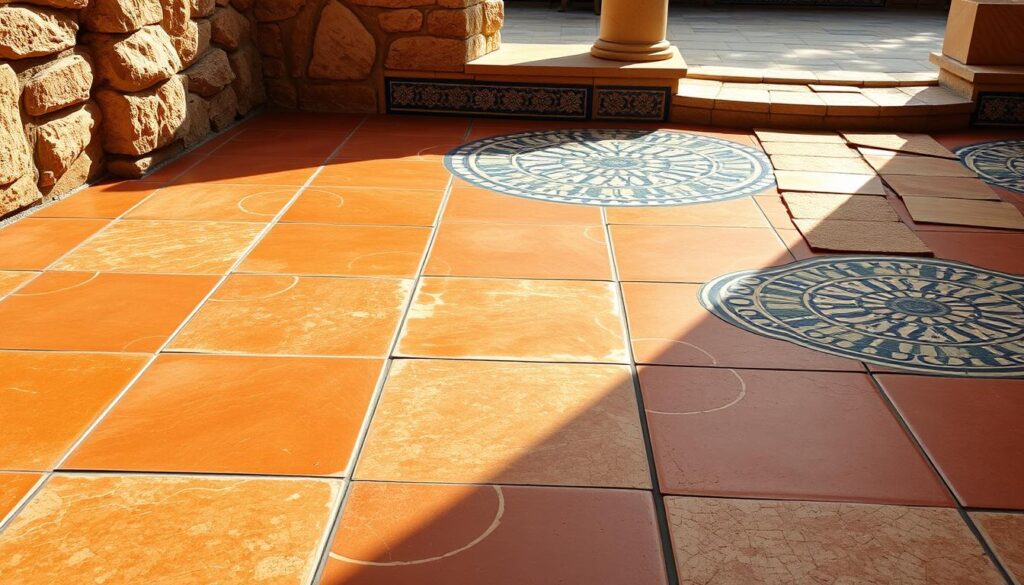
Tile and Stone Choices
Tile and stone are top picks for Mediterranean homes because they’re both durable and stylish. Terracotta tiles, for example, add warmth and character. They come in many shades and can be sealed to keep their color and last longer.
Marble and limestone are also great choices, offering a sophisticated look. These stones can create stunning patterns on your floor, adding interest to your space. When picking tile or stone, think about your Mediterranean style furnishings to ensure everything looks good together.
“The use of natural stone and tile in flooring not only adds beauty but also durability to Mediterranean homes.”
| Material | Characteristics | Best Use |
|---|---|---|
| Terracotta Tile | Warm tones, rustic charm | Living areas, kitchens |
| Marble | Elegant, sophisticated | Entryways, bathrooms |
| Limestone | Soft, natural look | Flooring, walls |
Wood Flooring and Its Benefits
Wood flooring is also a great choice for Mediterranean homes. It adds warmth and coziness to any room. Plus, you can stain it to match the rich tones of Mediterranean decor.
Wood floors are versatile and can go in many rooms. They work well with different furniture and decor styles. Plus, they’re easy to care for and can be refinished to look like new.
- Warmth and coziness
- Versatility in design
- Easy maintenance
In conclusion, the flooring you choose can really make your Mediterranean-inspired home stand out. By exploring options like tile, stone, and wood, you can create a space that’s both beautiful and inviting.
Walls and Ceilings in Mediterranean Design
The walls and ceilings in a Mediterranean-style home blend old-world craftsmanship with modern tastes. They use natural materials and decorative touches. This sets the mood for the whole house.
Paint and Finishes
Choosing the right paint and finishes is key in Mediterranean design. We often pick earthy tones like terracotta, sienna, and golden hues. These colors warm the space and connect it to nature.
- Earth tones like terracotta and sienna
- Soft whites and creams for a lighter feel
- Textured finishes to add depth
Decorative Arches and Beams
Decorative arches and beams are key in Mediterranean architecture. They bring elegance and sophistication to any room. These elements enhance the space’s beauty and function.
Key Features:
- Exposed wooden beams that add a rustic charm
- Arches that create a sense of flow between spaces
- Ornate details that reflect traditional craftsmanship
In conclusion, the walls and ceilings in Mediterranean design are crucial. They make a home warm, inviting, and beautiful. By picking the right paint and finishes, and adding decorative arches and beams, homeowners can bring this timeless style to life.
Creating Indoor-Outdoor Spaces
Making indoor and outdoor spaces blend smoothly is key in modern Mediterranean home design. This style focuses on connecting with nature and making living areas bigger than just four walls.
Mediterranean homes use special features to merge indoors and outdoors. Courtyards and terraces are two main elements in this design.
Use of Courtyards and Terraces
Courtyards and terraces act as bridges between inside and outside. A courtyard is surrounded by the house and offers a quiet, private outdoor spot. It’s still close to nature.
- Courtyards can be landscaped with Mediterranean plants like olive trees, rosemary, and lavender, enhancing the sensory experience.
- Terraces, on the other hand, offer expansive views of the surrounding landscape and can be used for dining or relaxation.
- Both courtyards and terraces can be designed with comfortable seating areas, outdoor kitchens, or fire pits, making them integral parts of the home’s living space.
These features let homeowners enjoy outdoor living while staying protected from the weather.
Landscaping that Complements the Interior
The landscaping around a Mediterranean home is a big part of the design. The plants, garden beds, and outdoor decor all work together to create a unified look. This ties the indoor and outdoor spaces together.
For a Mediterranean-inspired home, choose native plants that are drought-resistant and easy to care for. Some good options include:
- Olive trees for their silvery foliage and historical significance.
- Lavender for its fragrant flowers and purple hue.
- Rosemary for its culinary uses and fragrant aroma.
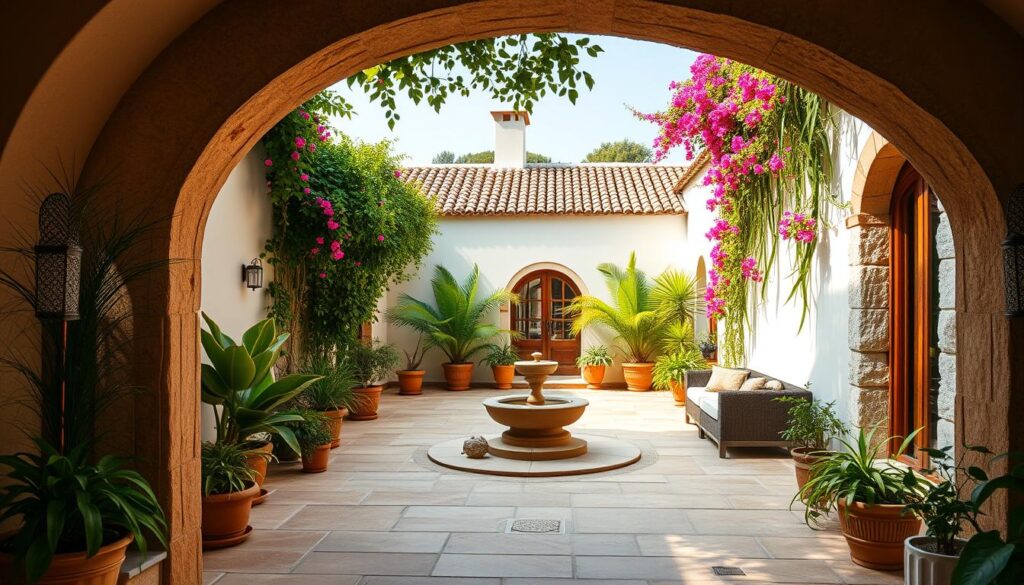
By picking plants and landscaping that match the interior design, homeowners can make a smooth flow between indoors and outdoors. This enhances the Mediterranean look of the home.
Furnishing Your Mediterranean Home
Furnishing a Mediterranean home is all about mixing comfort with style. We’ll show you how to pick the best sofas, chairs, and decor. This will make your space welcoming and stylish.
Choosing the Right Sofas and Chairs
Sofas and chairs are key in Mediterranean style. Look for ones with intricate carvings and rich, earthy tones. These bring the Mediterranean’s warmth into your home. Here’s a table to help you choose:
| Furniture Piece | Characteristics | Materials |
|---|---|---|
| Sofas | Curved lines, plush cushions | Wood, velvet, leather |
| Chairs | Intricate carvings, ergonomic design | Wood, wrought iron, fabric |
Essential Decorative Accessories
To finish your Mediterranean home, add luxury decor. Think about these items:
- Ceramic vases with traditional Mediterranean motifs
- Woven baskets for texture and warmth
- Metallic accents in bronze or copper
Choosing the right sofas, chairs, and decor makes your home elegant and warm. Explore different textures and styles to find the perfect fit for your space.
Lighting Solutions for Mediterranean Interiors
Mediterranean interior design is all about warmth and elegance. Lighting is key to making homes feel welcoming. We’ll look at lighting options that can make your Mediterranean space shine.
Chandeliers and Pendant Lights
Chandeliers and pendant lights are more than just lights. They’re the stars of the room, adding style. For a Mediterranean look, choose fixtures with a rustic or vintage vibe. Wrought iron or bronze finishes work well with the earthy tones and classic feel of Mediterranean design.
Think about the size of your room when picking lights. Big rooms need bigger lights, while smaller ones do better with smaller ones. The goal is to light up the room without losing its charm.
Utilizing Table and Floor Lamps
Table and floor lamps add extra light, making your space feel cozier. Look for lamps in materials like ceramic, terracotta, or metal with fancy details. They bring Mediterranean charm to your room. Place them where they create cozy spots and show off your decor.
Choose lamps that match your room’s colors and textures. Earthy tones and natural materials fit right in with Mediterranean style. Lamps with unique designs or patterns also add to the room’s look, making it more interesting.
Using a mix of lights, like chandeliers, pendant lights, table lamps, and floor lamps, creates a layered lighting effect. This makes your Mediterranean interior both beautiful and functional. It highlights your space’s best features and makes it feel warm and welcoming.
Mediterranean Kitchen Design
The kitchen is at the heart of every Mediterranean home. It’s a place of warmth and elegance. Here, culinary traditions are shared across generations.
Features of a Traditional Mediterranean Kitchen
Traditional Mediterranean kitchens are warm and inviting. They use natural materials and earthy colors. Key features include:
- Use of natural stone for countertops and flooring
- Earth-toned ceramics and pottery
- Wrought iron accents and decorative elements
- Large, central islands for food preparation and socializing
These elements make the kitchen functional and welcoming. It’s a space for family and friends to gather.
Modern Updates That Retain Character
Modern updates can enhance a Mediterranean kitchen’s style and function. Some updates include:
- Smart Appliances: Smart technology makes cooking easier and more efficient.
- Sleek Storage Solutions: Modern storage keeps the kitchen tidy and uncluttered.
- Energy-Efficient Fixtures: New lighting and plumbing save energy and update the kitchen.
By mixing traditional and modern elements, homeowners can create a beautiful and functional Mediterranean kitchen.
Designing Cozy Living Spaces
The heart of a Mediterranean home is its cozy living areas. These spaces are filled with warmth and comfort. To make them inviting, focus on elements that promote relaxation and togetherness.
Arranging Furniture for Comfort and Style
When setting up your Mediterranean-style living room, think about the space’s flow. This helps create areas for interaction. Mediterranean style furnishings, like plush sofas and armchairs, add style and comfort.
Make your furniture arrangement a conversational circle. Leave enough room for easy movement. This setup encourages community, a key feature of Mediterranean homes.
Incorporating Textiles for Warmth
Textiles are key in adding warmth and depth to your space. Use throw blankets, woven baskets, and mediterranean color palette-inspired rugs. These can make your living area cozier.
Choose textiles that reflect Mediterranean style. Earthy tones, blues, and whites are common. They add warmth and make your space inviting.
Final Touches: Personalizing Your Space
As we wrap up our guide to Mediterranean home interior design, the final touches are key. They make a Mediterranean home truly special. Adding personal touches that reflect Mediterranean luxury and charm is crucial. It creates a warm and inviting atmosphere.
Art and Decorations with Mediterranean Flair
Adding luxury Mediterranean decor to your home is easy. Use vibrant artwork, intricately designed ceramics, and ornate textiles. These elements add visual interest and honor the Mediterranean region’s rich culture.
Maximizing Cultural Inspirations in Decor
To bring your Mediterranean home renovation ideas to life, add cultural inspirations to your decor. Use traditional motifs like Spanish tiles or Italian frescoes in your design. This way, you’ll create a space that’s not only beautiful but also filled with history and character.