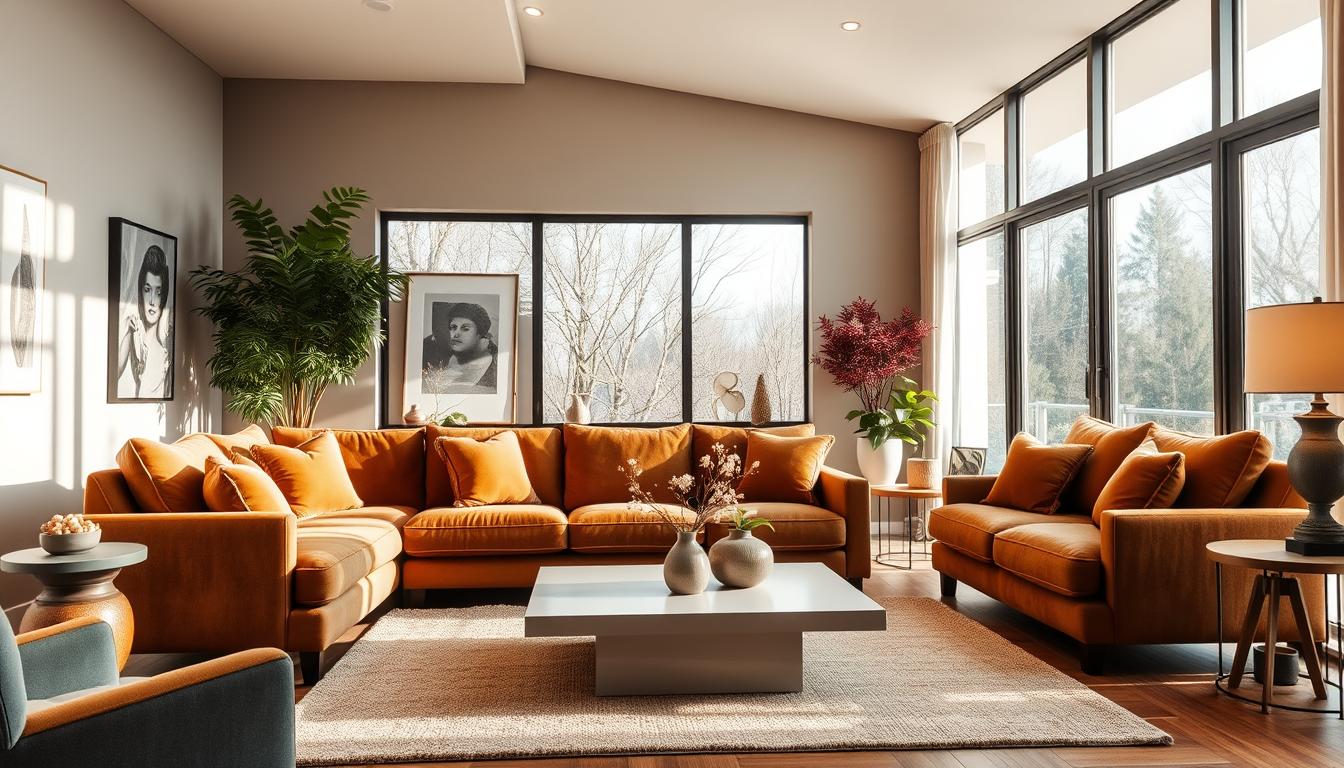


With remote work on the rise, having a dedicated workspace at home is key. A well-designed home office can increase productivity by up to 20%. It’s not just about a quiet corner. It’s about creating a space that boosts focus, creativity, and comfort.
In this guide, we’ll show you how to make an efficient interior home office. We’ll cover everything from the benefits of a dedicated space to sustainable practices. You’ll learn how to design your home office for maximum productivity.
Key Takeaways
- Understand the benefits of a dedicated home office space.
- Learn how to design your home office for maximum productivity.
- Discover sustainable practices to incorporate into your workspace.
- Find tips on maintaining motivation while working from home.
- Explore how to create a comfortable and ergonomic workspace.
Understanding the Benefits of a Home Office
A well-designed home office brings many benefits that can make our work better. It helps us work more efficiently and improves our life quality.
Increased Productivity
One big plus of a home office is increased productivity. It’s free from distractions found in regular offices. This lets us focus better and work more efficiently.
Cost Savings
Having a home office can save a lot of money. It cuts down on commute costs, like fuel and public transport. It also lowers utility bills by using less energy.
Flexibility and Comfort
A home office lets us make a space that’s both comfy and good for work. We can add office decor ideas that boost creativity. This makes work more fun. It also helps us manage work and personal life better.
Knowing these benefits helps us see why a good home office is worth the effort.
Key Elements of a Functional Workspace
To work efficiently, your home office must have certain key elements. A well-designed space boosts productivity and adds beauty to your home through interior decorating.
Ergonomic Furniture
Ergonomic furniture is crucial for a good workspace. It keeps you comfortable and safe, helping prevent injuries and improving your posture. Look for furniture that adjusts to fit you, like a chair with lumbar support and a desk for working with arms at 90 degrees.
Adequate Lighting
Good lighting is key for seeing well and feeling good. Natural light is best, but good artificial light is also important. Layered lighting includes overhead, task, and ambient lights. It makes your workspace bright and reduces eye strain.
Storage Solutions
Good home office organization needs the right storage. Clutter slows you down, so you need a way to manage papers, supplies, and tools. Use filing cabinets, shelves, and desk organizers to keep things neat.
With these elements, you can make a home office that works well and looks good. It will make your work time better.
Choosing the Right Location in Your Home
Setting up a home office starts with finding the perfect spot in your home. This choice is key to your productivity and work-from-home happiness. By considering a few important factors, you can make a work from home setup that’s both effective and cozy.
There are two main things to look for in a home office location. You need a quiet spot and a place with plenty of natural light.
Quiet Areas
Finding a quiet spot is essential to avoid distractions and stay focused. A quiet area helps you work better. Here are some tips to find one:
- Look for a room or corner that’s away from busy areas in your home.
- Use noise-cancelling materials or soundproofing if you need to.
- Tell your family to respect your work time.
Natural Light Availability
Natural light greatly affects our mood and how well we work. A bright space can make you feel more energetic and happy. Here’s how to get more natural light:
- Put your desk near a window if you can.
- Use mirrors or shiny surfaces to spread light around.
- Don’t block sunlight with thick curtains or drapes.
In small homes, it’s possible to create a great home office. By picking a quiet spot with lots of natural light, you can make a small home office ideas that improve your work life.
In summary, where you set up your home office is very important. Focus on finding a quiet spot with lots of natural light. This way, you can make a workspace that’s both productive and comfortable for you.
Designing an Aesthetic Yet Practical Space
The perfect home office blends style with function. It boosts work experience and well-being. Aesthetics are key to our productivity and job happiness.
Think about how your home office affects your mood and work. A well-designed space can spark creativity and motivation. It makes tackling tasks easier.
Color Psychology
Colors deeply impact our emotions and work. Blue promotes calm and focus, while yellow boosts creativity. Pick colors based on your work and desired mood.
Some popular colors for a home office include:
- Soft blues and greens for calm
- Neutral tones like beige and gray for balance
- Bright colors like orange and yellow for energy and creativity
Experts say the right color greatly affects our work space. “Color is a powerful tool that can affect our mood, energy, and productivity,” says a renowned interior designer.
“The right color can make a space feel more welcoming, professional, or energizing, depending on the desired outcome.”
The Power of Decor
Your home office decor reflects your personality and style. Artwork, rugs, and decorative items add a personal touch. They turn a simple workspace into a creative space.
Choose decor that matches your desired aesthetic. Sleek lines and minimal decor are great for a modern look. Classic pieces and warm textures create a cozy traditional feel.
Personalization Options
Personalizing your home office meets your specific needs. It enhances comfort and efficiency. This includes ergonomic accessories, personalized storage, and technology integration.
Some personalization ideas include:
- Adding plants for a natural touch and air purification
- Incorporating family photos or personal artwork
- Using adjustable furniture to accommodate different work styles
By mixing stylish design with practicality, you create a home office that’s both beautiful and functional. This balance is essential for a productive and satisfying work experience.
Essential Technology for Your Home Office
The heart of a productive home office is its technology. As we work from home more, the right tools are crucial.
To build a modern home office, focus on key tech parts. First, you need a reliable computer. It can be a desktop or laptop, based on your needs.
Computers and Accessories
Choosing a computer involves looking at processing power, memory, and storage. You also need basics like a keyboard, mouse, and monitor. A modern computer setup can add style to your office.
- A strong processor for tough tasks
- Enough RAM for easy multitasking
- Plenty of storage for files and programs
- A top-notch monitor for clear images
Smart Home Devices
Adding smart home devices to your office boosts productivity and ease. These gadgets can manage tasks like lighting, temperature, and security.
| Device | Function | Benefit |
|---|---|---|
| Smart Thermostat | Temperature Control | Perfect working conditions |
| Smart Lighting | Lighting Control | Energy saving |
| Smart Security Cameras | Home Security | Better safety |
Reliable Internet Connection
A fast and stable internet is vital for any home office. It makes communication, data sharing, and cloud access smooth. Pick an internet plan that fits your needs, like device count and work type.
By focusing on these tech essentials, you can make a productive and efficient home office. Whether upgrading or starting fresh, the right tech is essential for success.
Creating Separation in a Multi-Use Space
Remote work demands clear boundaries in our home offices. These spaces often serve multiple purposes, like guest rooms or gyms. It’s key to separate work from leisure to keep a healthy balance.
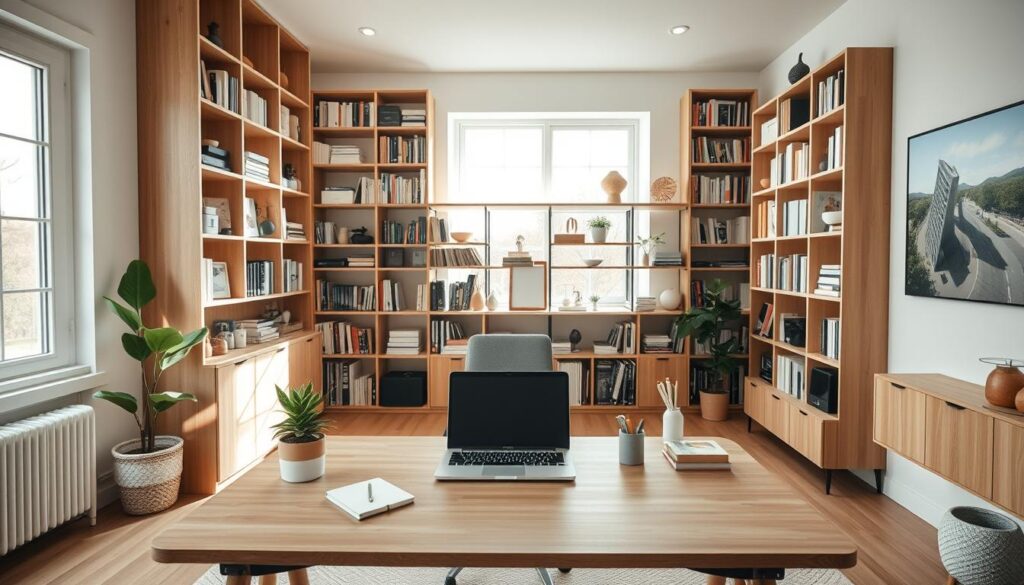
Distinguishing Work and Leisure Areas
To separate work and leisure, think about what each area needs. Workspaces require a desk, good lighting, and few distractions. Leisure areas should have comfy seating and entertainment.
Visual and functional separation is crucial. It tells your brain when to work and when to relax.
Using different colors, textures, or lighting can help. For example, workspaces might have modern desks and task lights. Leisure areas could have soft lighting and plush furniture.
Use of Room Dividers
Room dividers are great for separating spaces. They range from sleek glass to traditional screens. They define areas without big renovations.
| Type of Room Divider | Benefits | Best For |
|---|---|---|
| Glass Partitions | Maintains openness, allows natural light | Modern, minimalist spaces |
| Screen Dividers | Portable, versatile, decorative | Flexible, changing spaces |
| Curtains or Drapes | Softens the space, can be decorative | Cozy, traditional settings |
Room dividers help make your home office functional and comfy. They support your work-life balance and well-being.
Organizing Your Workspace Efficiently
Keeping your home office organized is essential for staying productive. A tidy workspace boosts productivity, lowers stress, and improves work quality.
Effective Desk Organization
To maintain a clean desk, using trays and organizers is vital. They help sort documents and supplies, keeping them handy while avoiding clutter.
- Use desk trays for paperwork and supplies.
- Get a desk organizer for pens and pencils.
- Try a cable management system for cords.
Cable Management Solutions
Managing cables is crucial for a clean workspace. Messy cables can be distracting and unsafe. Cable management solutions help keep your space tidy and safe.
| Cable Management Method | Description | Benefits |
|---|---|---|
| Cable Ties | Used to bundle cables together. | Reduces clutter, improves safety. |
| Cable Organizers | Devices that manage cables through clips or channels. | Enhances workspace aesthetics, reduces cable wear. |
| Wireless Devices | Devices that operate without cables. | Minimizes cable clutter, increases flexibility. |
By using these tips for desk organization and cable management, you can make your home office more efficient. A well-organized space not only boosts your work but also makes it more comfortable.
The Importance of Natural Elements
To make your home office both beautiful and productive, add natural elements. This not only makes your space look good but also makes it healthier and more efficient.
Bringing the Outdoors In
You can bring nature into your office by using natural materials, adding plants, or having views outside. A stylish office design often includes these elements to make your workspace welcoming and inspiring.
- Use natural materials like wood or stone for furniture and decor.
- Incorporate plants known for their air-purifying qualities.
- Ensure your workspace has a view of the outdoors, if possible.
Benefits of Indoor Plants
Indoor plants are a great way to bring nature into your office. They clean the air, reduce stress, and make you feel better and more productive. For a stylish office design, pick plants that look good and serve a purpose.
For more tips on designing the perfect home office, check out our top tips for designing the perfect home. This guide offers great advice on creating a workspace that looks good and works well.
Key Benefits of Indoor Plants:
- Air Purification: Indoor plants clean the air, making it healthier to breathe.
- Mood Enhancement: Plants can make you feel happier and less stressed.
- Aesthetic Appeal: Plants add a natural beauty to your office, making it look better.
Incorporating Sustainable Practices
Creating an efficient home office means thinking about eco-friendly practices. As we design our workspace, we can make choices that help our productivity and the planet.
Choosing the right furniture is a simple way to make our home office sustainable. Eco-friendly furniture comes from sustainable sources, is recycled, or has little environmental impact.
Eco-Friendly Furniture Choices
When picking furniture, look for pieces made from reclaimed wood, bamboo, or other sustainable materials. These materials are good for the environment and add a special touch to our workspace.
Using recycled materials in our furniture is also important. Many companies now make desks, chairs, and shelves from recycled plastics or metals. This reduces waste and saves raw materials.
Energy-Efficient Lighting
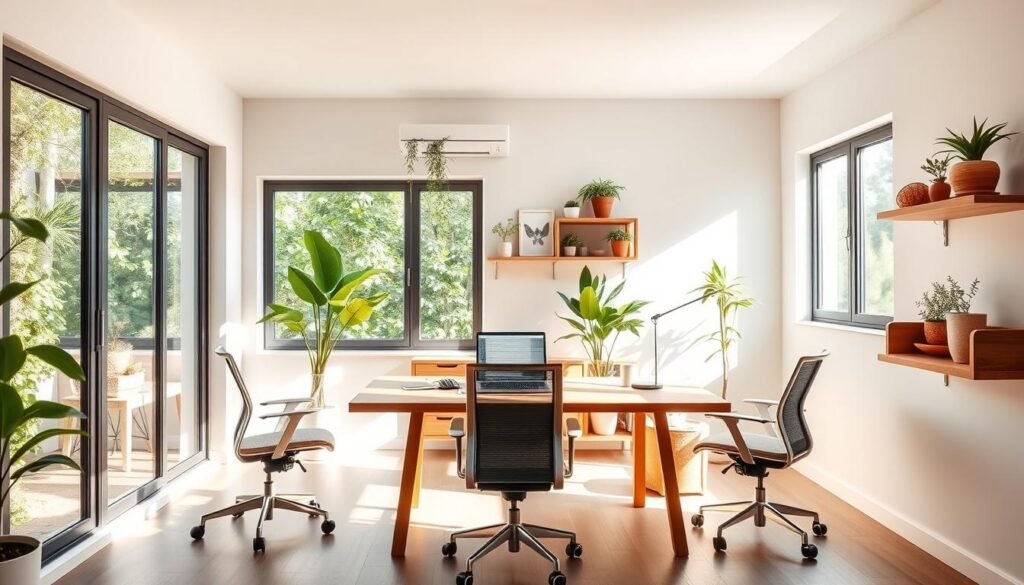
Lighting is key in any home office. Switching to energy-efficient lighting can cut down our carbon footprint. LED bulbs, for example, use much less energy than old bulbs and last longer.
We can also use natural light to make our office brighter and more eco-friendly. Placing our workspace near a window can cut down on the need for artificial light during the day.
By adding these sustainable practices to our home office, we help the environment. We also create a space that boosts productivity and well-being.
Setting Boundaries for Work-Life Balance
Working from home means you need to separate work from personal time. This balance is key for staying productive and feeling good. A good work from home setup helps a lot with this.
Establishing Work Hours
Having regular work hours is important. It helps you stick to a routine and not work too much. It’s also good to tell your family and workmates when you’re working.
Laura Vanderkam, author of “What the Most Successful People Do Before Breakfast,” says, “The key is not to prioritize what’s on your schedule, but to schedule your priorities.” Setting work hours lets you focus on what’s important and keep a balance.
Communicating with Family
Telling your family about your work hours is crucial. You can use a shared calendar or just talk about it. This way, you can avoid interruptions and know when to spend time with your family.
“The way to get started is to quit talking and begin doing.”
By setting clear boundaries and talking to your family, you can make a home office design that works for both your work and personal life.
Tips for Maintaining Motivation and Focus
Staying motivated and focused is key to being productive in a home office. There are many strategies to help you stay on track. It’s easy to get sidetracked by personal tasks or chores when working from home. But, with a few simple techniques, you can keep your motivation high.
Creating a Daily Routine
Having a daily routine is crucial for staying motivated and focused. A regular schedule brings structure and normalcy to your workday. This includes setting work hours, taking breaks, and planning your tasks ahead of time.
Laura Vanderkam, author of “What the Most Successful People Do Before Breakfast,” believes a morning routine sets the day’s tone. A well-planned routine helps you focus and avoid procrastination. Remember, it’s okay to adjust your routine as your work or personal life changes.
Utilizing Productivity Tools
Productivity tools can also boost your motivation and focus. There are many tools to help manage tasks, stay organized, and avoid distractions. For instance, project management software like Trello or Asana keeps you on track with tasks and deadlines.
Some popular productivity tools include:
- Task management apps like Todoist or Wunderlist
- Time tracking software like RescueTime or Harvest
- Focus-enhancing tools like Freedom or Cold Turkey
By using these tools in your daily routine, you can stay focused and motivated, even from home.
This quote shows how important it is to stay focused and motivated in our work. By setting a daily routine and using productivity tools, we can make the most of our time and reach our goals.
Regularly Reevaluating Your Workspace
As we settle into our interior home office, it’s easy to overlook the need for periodic assessments. Regularly checking our workspace is key for keeping productivity and comfort up. This way, we can spot areas that need work and tweak our space to work better.
Assessing Functionality
To check how well our small home office ideas work, we should look at workflow, ergonomics, and storage. Ask yourself: Are there any bottlenecks or distractions? Are the furniture and equipment set up for comfort and efficiency?
Making Necessary Adjustments
Once we’ve found areas to improve, we can make the needed changes. This might mean rearranging the layout, getting new equipment, or better organizing. By doing these things, we keep our home office both productive and comfy.
By regularly checking and fine-tuning our workspace, we keep our interior home office running smoothly. It supports our work and boosts our well-being.