
Did you know homes with Spanish-influenced design are getting more popular? This style mixes the warmth of Spanish architecture with modern touches. It creates a unique and welcoming space.
Exploring Spanish-style homes takes us into their rich history and cultural roots. We’ll share our best tips to bring these elements into your home. This will make your space cozy and inviting.
Key Takeaways
- Understanding the core elements of Spanish-influenced design
- Tips for incorporating Spanish-style features into your home
- Balancing traditional and modern elements
- Creating a warm and inviting atmosphere
- Popular design elements to enhance your space
Understanding Spanish-Style Homes and Their Aesthetic
Exploring Spanish-style homes reveals a mix of history and beauty. These homes, rooted in Spanish Colonial architecture, are a key part of Mediterranean interiors. They charm homeowners with their special appeal.
Historical Background of Spanish Architecture
Spanish architecture has a rich history, shaped by cultures like the Moors, Romans, and Goths. This mix is seen in the detailed designs, arches, and columns of Spanish homes. The history of Spanish architecture is not just about looks; it’s also about cultural exchange and growth over time.
The Moors had a big impact on Spanish architecture, introducing Islamic designs like intricate tiles and arches. Knowing this history helps us understand Spanish-style homes. They show a unique mix of architectural styles.
Key Characteristics of Spanish Style Design
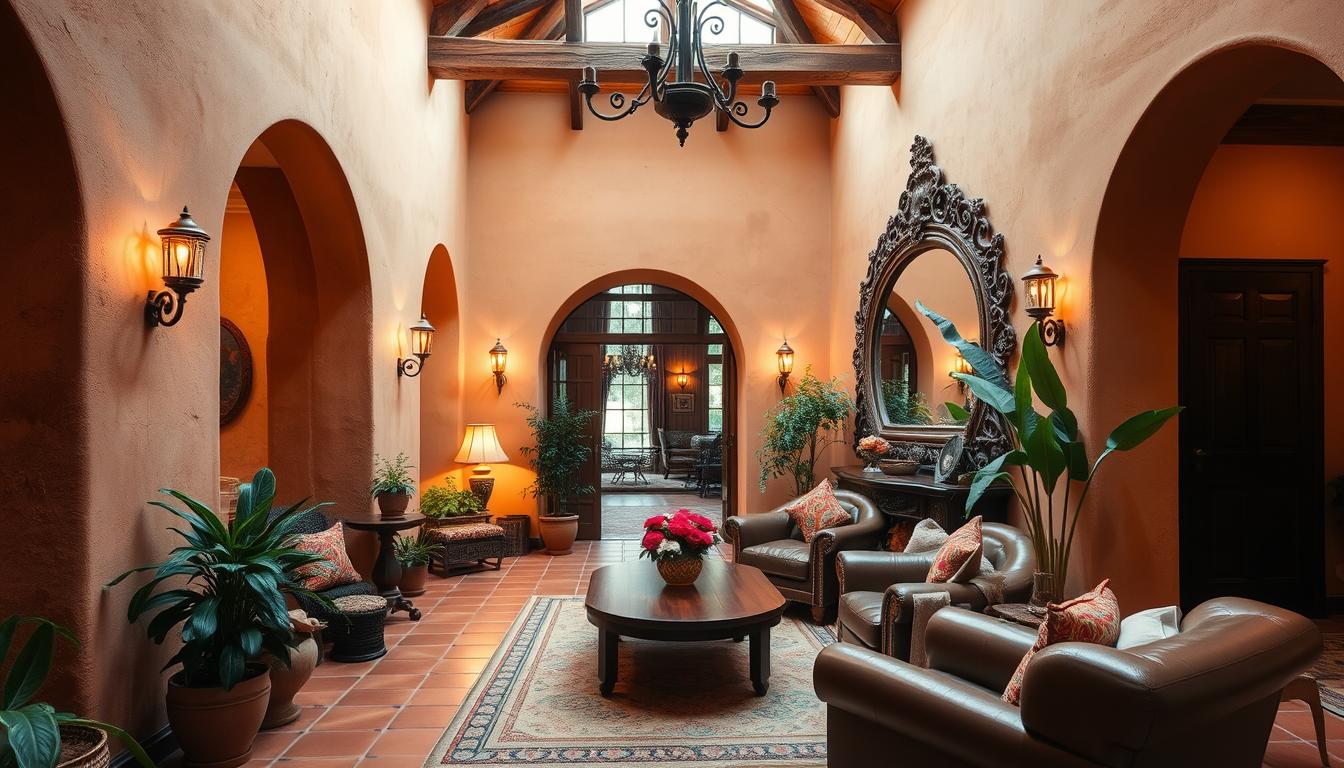
Spanish-style design stands out with arched doors and windows, exposed beams, and detailed designs. These features make the homes look good and feel welcoming. Warm colors and earthy tones add to the cozy feel.
Rustic wood furniture, elegant iron accents, and soft textiles are also key to Spanish style. Together, these elements make the interior design warm and inviting. It truly captures the spirit of Spanish Colonial decor.
Essential Elements of Spanish-Style Interiors
To truly capture the spirit of Spanish-style living, it’s essential to understand its core interior design elements. Spanish-style homes are renowned for their warm, inviting atmospheres and classic architectural features.
Arched Doorways and Windows
One of the defining characteristics of Spanish-style interiors is the use of arched doorways and windows. These architectural features not only add a touch of elegance but also create a sense of continuity between rooms. The arches are often rounded or slightly pointed, echoing the Moorish influences on Spanish architecture. As Laura Ashley, a renowned interior designer, once noted, “Arches bring a sense of history and sophistication to a room.”
Arched doorways and windows can be further enhanced with ornate woodwork or wrought iron details, adding to the overall aesthetic of the space.
Exposed Beams and High Ceilings
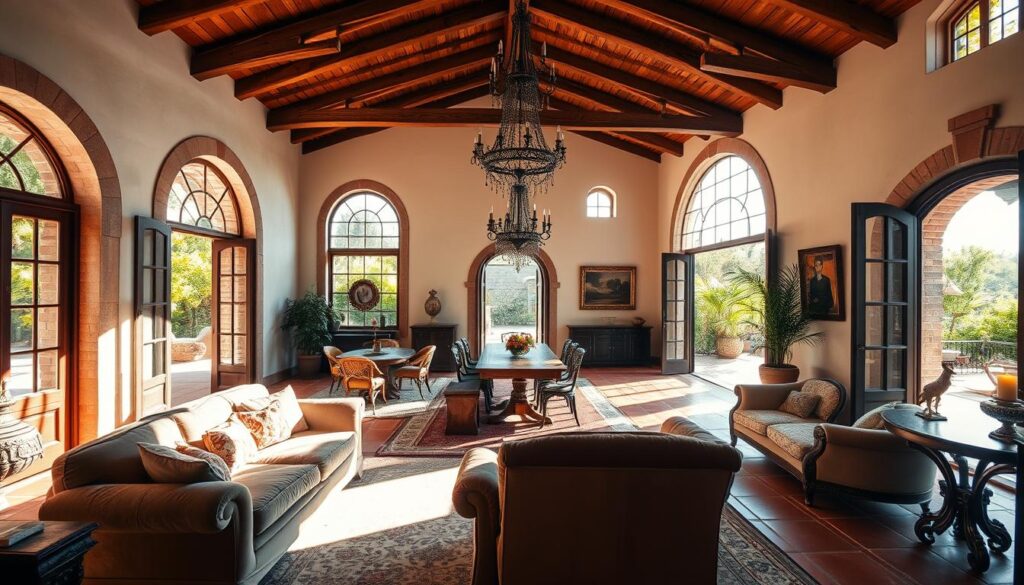
Exposed beams and high ceilings are another hallmark of Spanish-style interiors. The exposed beams, often made from sturdy woods like cedar or pine, add a rustic charm and help to create a sense of openness. High ceilings, on the other hand, contribute to the airy feel of the rooms, making them feel more spacious. This combination is effective in living areas and kitchens, where it creates a warm and welcoming ambiance.
As seen in many traditional haciendas, the use of exposed beams and high ceilings is not just aesthetically pleasing but also a nod to the historical roots of Spanish architecture.
Color Palette: Warm Neutrals and Earthy Tones
The color palette in Spanish-style interiors is characterized by warm neutrals and earthy tones, which evoke the sun-kissed landscapes of Spain. Shades of terracotta, sienna, and golden brown are commonly used, often complemented by creamy whites and soft grays. This palette not only reflects the natural beauty of the Spanish countryside but also creates a cozy and inviting atmosphere within the home.
“The earthy tones and warm neutrals used in Spanish-style interiors are reminiscent of the natural beauty of the Spanish terrain,” notes a leading interior design magazine. The use of such a palette can significantly enhance the southwestern home decor, bringing warmth and character to any room.
By incorporating these essential elements, homeowners can create a space that embodies the warmth and elegance of Spanish-style design, perfect for those who appreciate hacienda style interiors.
Furniture Choices for Spanish-Inspired Spaces
Spanish-style interiors are warm and inviting. This is thanks to the furniture choices. It’s important to pick furniture that shows the style’s heritage and makes the space cozy.
Rustic Wood Furniture
Rustic wood furniture is key in rustic Spanish interior design. Solid, distressed wood adds warmth and character. Look for pieces with intricate carvings or ornate details to show off traditional Spanish craftsmanship.
Some key features of rustic wood furniture include:
- Distressed or reclaimed wood
- Intricate carvings or ornate details
- Sturdy construction
Elegant Iron Accents
Elegant iron accents are also a big part of Spanish-inspired interiors. Wrought iron pieces, like chandeliers and door hardware, add sophistication. The contrast between wood and iron is visually appealing, typical of Moorish interior design.
“The use of wrought iron in Spanish design not only adds elegance but also pays homage to the rich cultural heritage of the region.”
Comfortable Textiles that Invite Relaxation
No Spanish-inspired space is complete without cozy textiles. Plush rugs, soft throw blankets, and pillows in rich, earthy tones are essential. Mix textures like velvet, linen, and wool for depth and interest. For more inspiration, visit our favorite designs.
Some popular textiles for Spanish-inspired interiors include:
| Textile | Description | Common Uses |
|---|---|---|
| Velvet | Luxurious, soft fabric | Upholstery, throw pillows |
| Linen | Natural, textured fabric | Draperies, table runners |
| Wool | Warm, durable fabric | Rugs, throw blankets |
Incorporating Tiles in Your Design
Tiles are key in Spanish revival architecture, adding elegance and warmth. They can change a room, making it beautiful and culturally rich.
Types of Tiles to Consider
In Spanish-style design, the tile type matters a lot. Here are some favorites:
- Terracotta Tiles: These have an earthy look and a rustic feel, common in Spanish homes.
- Glazed Ceramic Tiles: They come in many colors and designs, great for patterns and decorations.
- Mosaic Tiles: These add elegance and are often used in Spanish homes for their beauty.
Creative Ways to Use Tiles in Interiors
Tiles aren’t just for floors. They can be used in many ways to make your space Spanish-inspired:
- Backsplashes: Tiles make a great backsplash in kitchens, adding color and texture.
- Accent Walls: Use tiles for an accent wall to highlight a room, inspired by Spanish designs.
- Fireplace Surrounds: Tiles can make a fireplace surround stunning, adding warmth and character.
Using tiles in your design brings Spanish revival architecture into your home. It creates a warm, inviting space that honors Spain’s rich culture.
Spanish-Influenced Lighting Fixtures
In Spanish-style homes, lighting is more than just a need; it’s an art that brings warmth and character. The right lighting can make a room feel more real and welcoming.
Iconic Chandeliers and Fixtures
Spanish lighting is known for its detailed and ornate fixtures. Chandeliers are key, often with complex metalwork and fancy details. They light up the room and make a bold statement.
Some popular Spanish-style lighting includes:
- Wrought iron chandeliers with candle-shaped bulbs
- Ornate pendant lights with intricate metalwork
- Sconces with carved wooden or metal details
The Role of Natural Light in Spanish Design
Artificial lighting is important in Spanish interiors, but natural light is just as vital. Homes often have big windows, arched doors, and skylights to let in lots of natural light.
Getting the right mix of artificial and natural light is key. It creates a cozy and inviting atmosphere. This mix makes a Spanish-style home feel truly welcoming.
Outdoor-Indoor Flow in Spanish Homes
In Spanish homes, the lines between inside and outside are soft. This style makes sure your living areas feel connected to nature. It’s all about blending indoor and outdoor spaces smoothly.
Courtyards and patios are key to this blend. They’re like extra rooms outside, filled with comfy seats, plants, and Spanish touches.
Creating Courtyards and Patios
Courtyards and patios are peaceful spots in Spanish homes. They let people enjoy the outdoors right from their homes. To make these areas special, think about adding:
- Arched doorways and windows that open up to the outdoors
- Cozy seating with rustic wood and iron details
- Plants that grow well in the southwest
- Decorative tiles and fountains for looks and sounds
For more ideas on Spanish-style interiors, check out our guide on designing Spanish-style interiors.
Bringing Nature Inside: Plants and Decor
Bringing the outdoors in is also important in Spanish homes. You can do this by adding plants and natural decor inside.
| Element | Description | Benefits |
|---|---|---|
| Plants | Adding plants like succulents and olive trees | Cleans the air and looks good |
| Natural Textiles | Using baskets, jute rugs, and linen drapes | Makes things cozy and adds texture |
| Natural Decor | Adding stone, wood, and clay | Connects you to nature and adds charm |
By using these elements, you can make a hacienda style interior. It shows off Spanish beauty and connects you to nature.
The goal is to mix your indoor and outdoor spaces well. This way, you get the best of both. By following these tips, you can create a southwestern home decor that’s both stylish and welcoming.
Accessorizing with Spanish Flair
To add warmth and elegance to your home, accessorizing is key. Accessories can change a room’s feel. They can take you to Spain’s rustic landscapes.
Textiles: Throws, Pillows, and Rugs
Textiles bring warmth and texture to your Spanish-inspired home. Throws, pillows, and rugs in earthy tones can make a room feel special.
Choose materials that show the rustic charm of Spanish colonial decor. Wool, linen, or cotton with Spanish patterns are great choices.
Art and Decor: Embracing Cultural Influences
Art and decor capture Spanish culture’s essence. Vibrant tapestries and hand-painted ceramics add depth to your home.
Look for pieces that reflect Spanish art and architecture. This includes Moorish, Gothic, and Renaissance styles, typical of rustic Spanish interior design.
| Textile | Material | Use |
|---|---|---|
| Rug | Wool | Living Room |
| Throw Pillow | Linen | Accent Chair |
| Tapestry | Cotton | Wall Hanging |
By choosing textiles, art, and decor that show Spanish culture, you create a warm and character-filled home. It embodies the spirit of Spanish-style interior design.
Color Schemes: Making a Statement
Spanish-style homes often have a unique color palette. They balance bold colors with soft ones. This mix makes the interior welcoming and beautiful.
Bold Colors vs. Subdued Palettes
In Spanish design, bold colors make a statement. Soft colors calm the space. Warm neutrals like terracotta and sienna pair well with vibrant blues and emerald greens. This mix creates a stunning visual experience.
- Terracotta and sienna for warmth
- Vibrant blues for a pop of color
- Emerald greens for depth
Mixing Patterns for a Lively Look
Mixing patterns adds life to Spanish interiors. Use geometric tiles, intricate Moroccan rugs, and textured fabrics to achieve this. It’s an art.
- Start with a dominant pattern, like a geometric tile design.
- Add complementary patterns through rugs and fabrics.
- Balance bold patterns with solid colors to avoid overwhelming the space.
Adding Moorish design elements, like intricate tiles and bright colors, boosts the Spanish style. The goal is to mix patterns and colors well. This creates a space that’s both lively and welcoming.
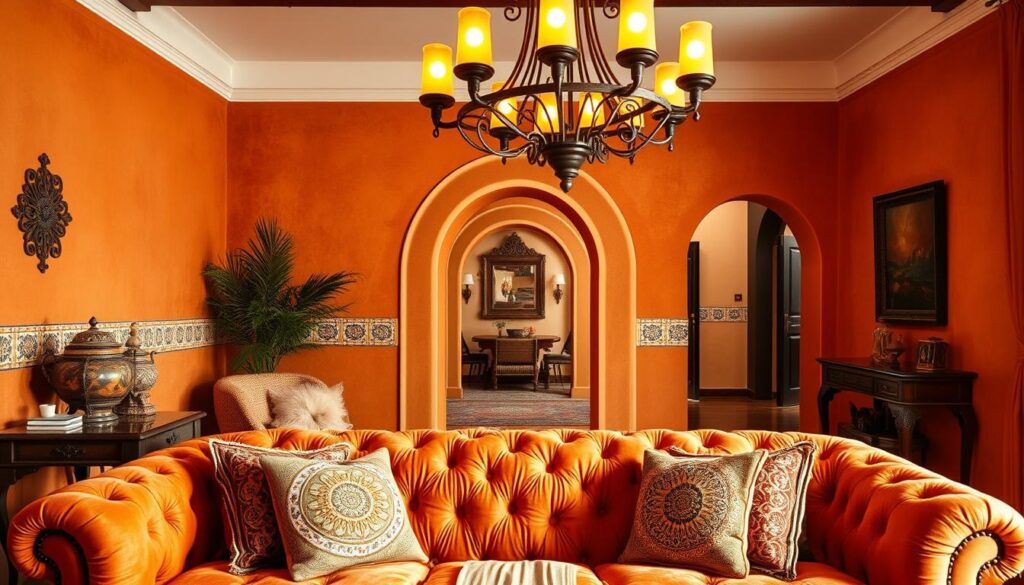
By carefully mixing bold and soft colors, and combining patterns, you can make a unique Spanish-style interior. It will show off your personal taste.
Spanish Style Renovations: What to Keep in Mind
Renovating a Spanish revival home can be tough but rewarding. We must keep the traditional elements that make these homes special. This is key when updating our homes for today’s needs.
Maintaining Authenticity in Modern Spaces
To keep your home’s Mediterranean look, understand its history and key features. Look for arched doorways, exposed beams, and warm, earthy colors.
When renovating, mix modern needs with traditional looks. For example, new kitchen appliances can go with old terra cotta tiles or wooden beams. This mix of old and new works well.
Budgeting for Renovations
Renovations can cost a lot, but planning helps stay within budget. First, list the must-haves for your Spanish-style home. Think about rustic wood furniture and elegant iron accents.
- Focus on what’s most important and impactful.
- Look for affordable, authentic materials.
- Get help from experts in Spanish revival architecture.
Being smart with our budget and keeping the home’s authenticity in mind, we can have a beautiful, functional space. This space will honor its heritage.
Final Touches: Bringing It All Together
As we put together the parts of Spanish-style interior design, we aim for a look that’s warm and elegant. We balance elements like arched doorways, exposed beams, and rustic wood furniture. This creates a welcoming and harmonious space.
Crafting a Unified Aesthetic
To achieve a unified look in your Spanish-style home, think about the color palette, textures, and decor. Warm neutrals and earthy tones set a soothing base. Then, add rich textiles, intricate tiles, and ornate metalwork. This thoughtful mix makes your space feel real and stunning.
Adding Personal Touches
Adding unique touches makes your Spanish-style home truly yours. Use vintage pieces, handmade crafts, or family heirlooms to add character. This way, your home honors the past and shows off your personal style.