
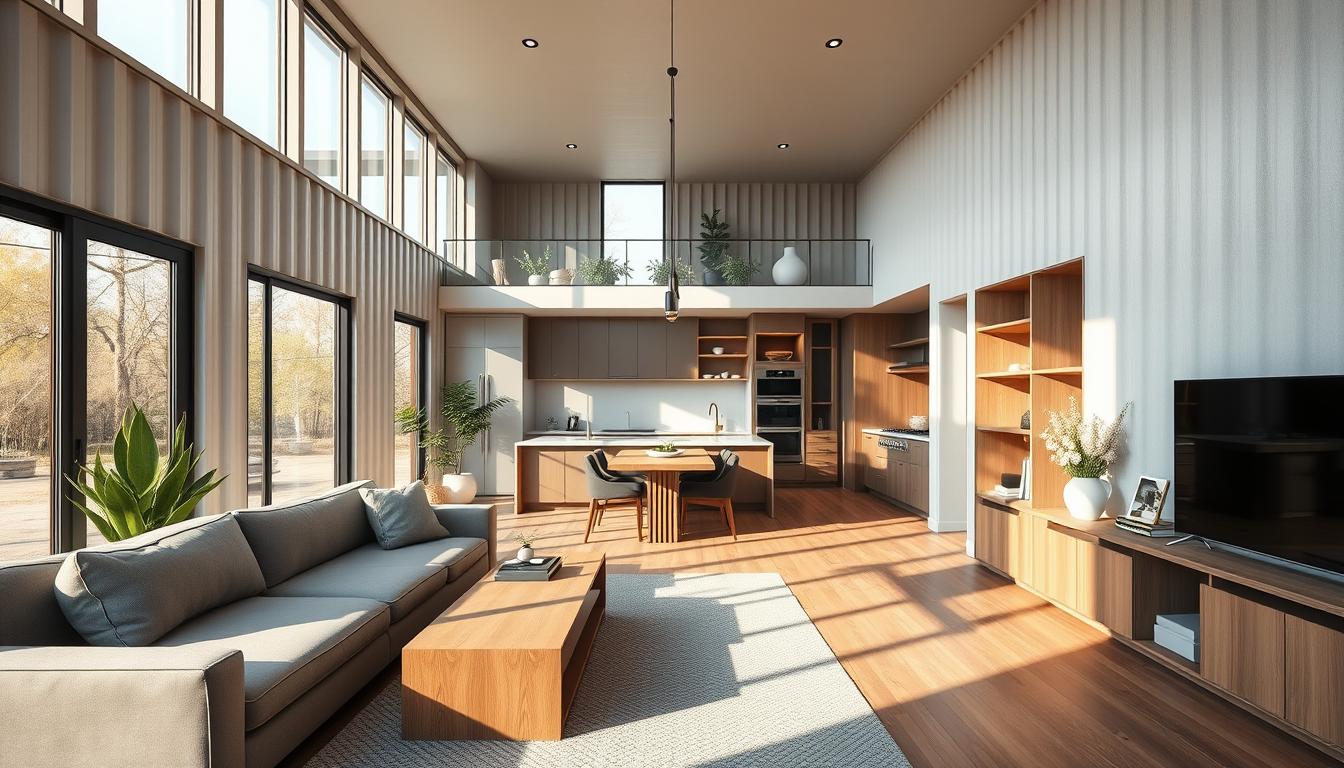
Did you know living in a repurposed steel structure is getting more popular? Turning a tough, industrial space into a cozy home is exciting for architects and homeowners.
When thinking about container house design ideas, the options are vast. We must think about the structural integrity of the container and how the interior space flows. This way, we can make a home that’s both beautiful and functional, showing off our personal style.
Key Takeaways
- Understanding the structural limitations and opportunities of a shipping container.
- Exploring creative ways to maximize space and functionality.
- Selecting materials and finishes that enhance the aesthetic appeal.
- Considering sustainable and eco-friendly design options.
- Balancing form and function to create a unique living space.
Understanding the Basics of Shipping Container Architecture
The world is moving towards sustainable living, and shipping container homes are a big part of it. We’re seeing a big change in how homes are made, with a focus on being green.
Shipping container homes are great for eco-friendly home decor and sustainable living interior design. They use old shipping containers, which cuts down on waste and saves the environment.
The Benefits of Shipping Container Homes
Shipping container homes are not just good for the planet; they also save money and last a long time. Here are some of the main benefits:
| Benefit | Description |
|---|---|
| Eco-Friendly | Made from repurposed shipping containers, reducing waste and the need for new materials. |
| Cost-Effective | Often cheaper than traditional housing options, with the potential for significant savings. |
| Durable | Shipping containers are built to withstand harsh conditions, making them a durable housing option. |
Key Design Considerations
When designing a shipping container home, several factors must be considered to ensure a functional and comfortable living space. These include:
- Maximizing natural light through strategic window placement
- Optimizing the layout for efficient use of space
- Selecting materials that are both sustainable and durable
By carefully considering these design elements, we can create a home that is not only eco-friendly but also beautiful and functional. It shows the beauty of sustainable living interior design.
Finding the Right Size and Configuration for Us
Choosing the right size and layout for our shipping container home is key. It affects how our home looks and how well it works. It also impacts how comfortable it is.
Standard Shipping Container Dimensions
Shipping containers come in different sizes. The most common are 20 feet and 40 feet long. They are usually 8 to 8.5 feet wide. The height varies from 8.5 to 9.5 feet, depending on the type.
| Container Type | Length (feet) | Width (feet) | Height (feet) |
|---|---|---|---|
| Standard | 20 | 8 | 8.5 |
| Standard | 40 | 8 | 8.5 |
| High-Cube | 20 | 8 | 9.5 |
| High-Cube | 40 | 8 | 9.5 |
Customizing Container Layouts
To make our living area spacious and functional, we can use multiple containers or change the layout. For example, removing walls between containers can create an open-plan space. This idea comes from tiny house interior inspiration and upcycled shipping container interiors.
Creating a Functional Floor Plan
A well-designed floor plan is key to a comfortable and efficient shipping container home. It’s important to think about both looks and function when designing the interior.
Importance of Space Optimization
Optimizing space is crucial in shipping container homes because they are small. Creative small space solutions can greatly improve their livability. Using furniture that serves more than one purpose and smart storage can help use every inch of space.
For example, using sliding doors or partition walls can create different areas without losing space. Loft beds or storage above living areas also add to the floor plan’s functionality.
Flow and Movement in Design
The flow and movement in a shipping container home are as important as space optimization. A good floor plan makes moving around easy. It should have a clear path and not be too crowded or blocked.
Using minimalist container home decor can also improve flow. Simple designs make spaces feel bigger and more welcoming. Also, placing windows and doors wisely can bring in more natural light and air, making the home more comfortable.
Choosing Appropriate Interior Materials
Choosing the right materials for a shipping container home’s interior is key. It makes the home look good and work well. The materials we pick also help the home be eco-friendly and save money.
We look at how materials affect the environment and their cost. This way, our home is good for the planet and easy on the wallet.
Sustainable Material Options
Today, making homes sustainable is important. For our shipping container home, we use materials that are good for the planet. Here are some examples:
- Reclaimed wood for flooring and furniture
- Bamboo for its fast-growing and renewable properties
- Low-VOC (Volatile Organic Compound) paints to improve indoor air quality
These materials help our home be kind to the environment. They also give it a special look.
Cost-Effective Material Choices
Cost is also a big deal. We find materials that are both good for the planet and affordable. For example:
| Material | Cost-Effectiveness | Sustainability |
|---|---|---|
| Reclaimed Wood | Moderate | High |
| Bamboo | High | High |
| Low-VOC Paints | Moderate | High |
The table shows that bamboo is a great choice. It’s good for the planet and doesn’t cost too much.
By picking materials that are both good for the planet and affordable, we make a beautiful home. It’s also eco-friendly and works well.
Lighting Considerations for Container Interiors
Lighting is key in making shipping container homes both functional and cozy. The right lighting can turn a container into a warm and inviting place to live.
We must focus on two main areas: using natural light and choosing the right indoor lighting. By mixing these, we can make our container home bright and welcoming.
Maximizing Natural Light
Getting more natural light is crucial for making our container home feel bigger and more welcoming. We can do this by adding bigger windows or skylights. Placing windows strategically helps bring in more light.
For example, windows on opposite sides of the container can create a natural ventilation pathway. This reduces the need for artificial light during the day. Also, using mirrors or light-colored finishes helps spread natural light evenly.
“The way we light our homes can dramatically change the way we feel and interact within those spaces.” –
Types of Indoor Lighting
Along with natural light, the right indoor lighting can also improve our container home’s feel. There are different types of indoor lighting:
- Ambient Lighting: Gives overall light to the space.
- Task Lighting: Focuses on areas for tasks like reading or cooking.
- Accent Lighting: Highlights special features or areas, adding depth and interest.
Choosing LED lighting is a green option because it’s energy-efficient and lasts longer than traditional lights. Smart lighting systems also help us control and adjust light, saving energy.
| Lighting Type | Purpose | Eco-Friendly Options |
|---|---|---|
| Ambient | Overall Illumination | LED Panels |
| Task | Specific Tasks | LED Desk Lamps |
| Accent | Highlight Features | Smart LED Strips |
Efficient Storage Solutions in Container Homes
Container homes are small, so we need smart storage ideas. We must find ways to keep our living space tidy and organized. This means using creative storage solutions that fit our needs.
Multi-Functional Furniture
Using multi-functional furniture is a great way to save space. Items like storage ottomans, sofa beds, and coffee tables with hidden spots can really help. For example, a storage ottoman can be a footrest, extra seat, and a place to store things like blankets or toys.
For more ideas on making your space better, see our guide on unlocking your trailer home’s potential. It has tips on using every inch of space.
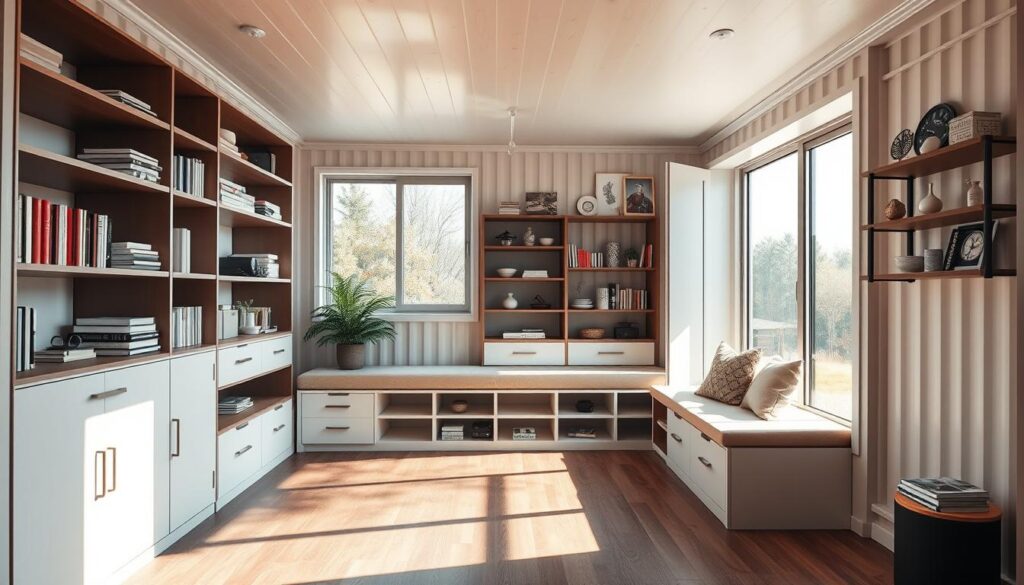
Built-In Storage Ideas
Built-in storage is another smart choice for container homes. It keeps things organized without taking up too much room. You can have built-in shelves, secret spots, and storage under beds.
| Storage Solution | Description | Benefits |
|---|---|---|
| Multi-Functional Furniture | Furniture that serves more than one purpose | Space-saving, versatile |
| Built-In Shelving | Shelves integrated into the container walls | Maximizes vertical space, keeps items off the floor |
| Under-Bed Storage | Storage compartments under beds | Utilizes wasted space, keeps bedrooms tidy |
By using these storage ideas, we can make our container homes more organized and inspiring. We can draw inspiration from tiny house interior inspiration to use our space wisely.
Color Schemes and Interior Design Styles
Choosing the right color palette and design style is key for a cozy and green shipping container home. The right choices make the space look good and help it be sustainable.
When picking colors, think about the natural light and the shipping container’s features. Light colors can make the space feel bigger and brighter. Darker shades can add warmth and coziness. Finding the right balance is important to reflect our style and use natural light well.
Popular Color Palettes
Some favorite color schemes for minimalist container homes include:
- Monochromatic schemes that use different shades of one color for a unified look.
- Neutral tones like beige, gray, and white for a clean, minimalist feel.
- Earth tones that add warmth and a natural feel to the space.
Aligning Style with Sustainability
Making our design sustainable is good for the planet and makes our home better. We can do this by:
- Choosing eco-friendly materials for furniture and decor.
- Using energy-saving lighting.
- Choosing multi-functional furniture to reduce clutter and make the most of space.
By carefully picking our colors and design, we can make a shipping container home that looks great, is sustainable, and feels comfortable.
Insulation and Climate Control for Comfort
To make our upcycled shipping container interiors livable, we must focus on effective insulation and ventilation strategies. Proper insulation helps maintain a consistent indoor temperature. This reduces the need for heating and cooling, enhancing comfort and energy efficiency.
When it comes to insulation, the choice of material is critical. We need materials that provide high thermal resistance, are durable, and fit within our budget.
Best Insulation Materials
Some of the best insulation materials for shipping container homes include:
- Spray Foam Insulation: Offers high R-value per inch, is moisture-resistant, and can fill gaps and cracks.
- Fiberglass Insulation: Cost-effective, easy to install, and provides good thermal resistance.
- Reflective Insulation: Reflects radiant heat, reducing summer heat gain.
- Rigid Foam Board Insulation: High R-value, moisture-resistant, and can be used on walls, floors, and ceilings.
| Insulation Material | R-Value | Moisture Resistance | Cost |
|---|---|---|---|
| Spray Foam | 6.0-7.0 per inch | High | High |
| Fiberglass | 2.9-3.8 per inch | Low | Low |
| Reflective Insulation | Varies | High | Medium |
| Rigid Foam Board | 4.0-6.0 per inch | High | Medium |
Experts say, “Insulation is key to making a shipping container habitable. Without it, the metal walls would make the interior unbearably hot in the summer and cold in the winter.” (
Energy.gov
)
Ventilation Strategies
Effective ventilation is crucial for maintaining air quality and regulating temperature. We can achieve this through various strategies:
- Natural Ventilation: Using windows, doors, and vents to allow fresh air to enter and stale air to escape.
- Mechanical Ventilation: Installing fans and ventilation systems to circulate air and remove heat.
- Cross-Ventilation: Designing the layout to maximize cross-ventilation, allowing cool air to enter and hot air to exit.
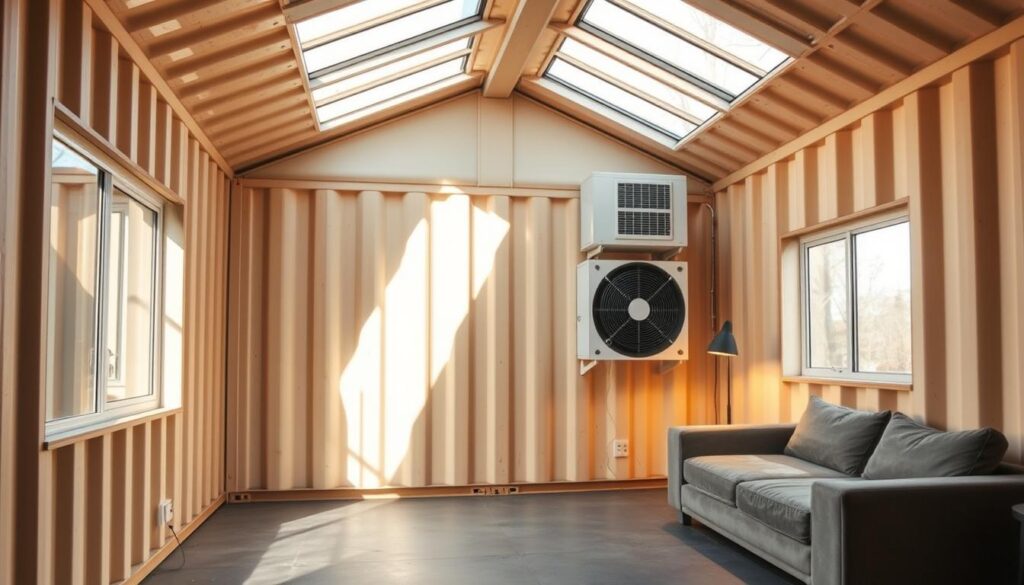
By combining the right insulation materials with effective ventilation strategies, we can create a comfortable and sustainable living environment in our shipping container home. This embodies creative small space solutions.
Incorporating Technology Into Our Design
The future of shipping container homes is bright. They will integrate technology for a smarter, more efficient living space. We’re pushing the limits of industrial chic container house design by adding smart home features and energy-saving solutions.
Technology makes our container homes better and helps the planet. We use smart home technology to make our homes more comfortable, efficient, and green.
Smart Home Features
Smart home features boost our shipping container homes. Some key ones are:
- Automated lighting that changes with the day and who’s home
- Smart thermostats that save on heating and cooling
- Remote home security systems
These features make our homes more convenient, energy-smart, and safe.
Energy Efficiency Solutions
Energy efficiency is key in eco-friendly home decor. It helps cut down on carbon emissions and utility bills. Some good strategies are:
| Energy Efficiency Measure | Description | Benefits |
|---|---|---|
| Solar Panels | Renewable energy source | Reduces grid electricity use |
| Energy-Efficient Appliances | Appliances that use less energy | Lower energy use and costs |
| Smart Home Automation | Controls lighting, heating, and cooling | Uses energy wisely based on need |
By using these technologies, we make shipping container homes stylish, comfy, and green.
Bringing Our Outdoor Space In
Making our indoor and outdoor spaces blend can make our living area feel bigger and more connected. When designing our shipping container homes, we can make the transition between inside and outside smooth. This improves our sustainable living interior design.
Seamless Transitions
For a smooth indoor-outdoor flow, think about installing big sliding glass doors or wide windows. These open up to the outside. They let in natural light and make our tiny house interior feel bigger.
Greenery for Interiors
Adding plants and greenery to our interior design helps merge indoors and outdoors. Pick easy-to-care-for plants like succulents or air plants. They do well inside and add natural beauty to our space.
Using these design tips, we can make a living space that’s both integrated and inspiring. It celebrates the beauty of both indoors and outdoors. This perfectly captures the spirit of tiny house interior inspiration and sustainable living interior design.