
Did you know adding traditional touches can boost your property value by up to 15%? This is true for homes with a Spanish-style interior. They are very popular in the US real estate market.
We’ll show you how to design a beautiful Spanish-style living space. Our advice will help you create a warm and elegant look. It will reflect the beauty of Spanish culture.
By following our tips, you’ll make a stunning interior. It will show off the unique charm of Spanish design.
Key Takeaways
- Understand the key elements of Spanish-style interior design
- Learn how to incorporate traditional elements into your decor
- Discover how to create a warm and inviting atmosphere in your home
- Find out how to increase your property value with Spanish-style design
- Get tips on how to balance traditional and modern elements
Understanding Spanish Home Interior Design
Spanish home interior design combines Moorish, Gothic, and Mediterranean styles. This mix creates a unique look that is both elegant and welcoming.
The Distinctive Elements of Spanish Style
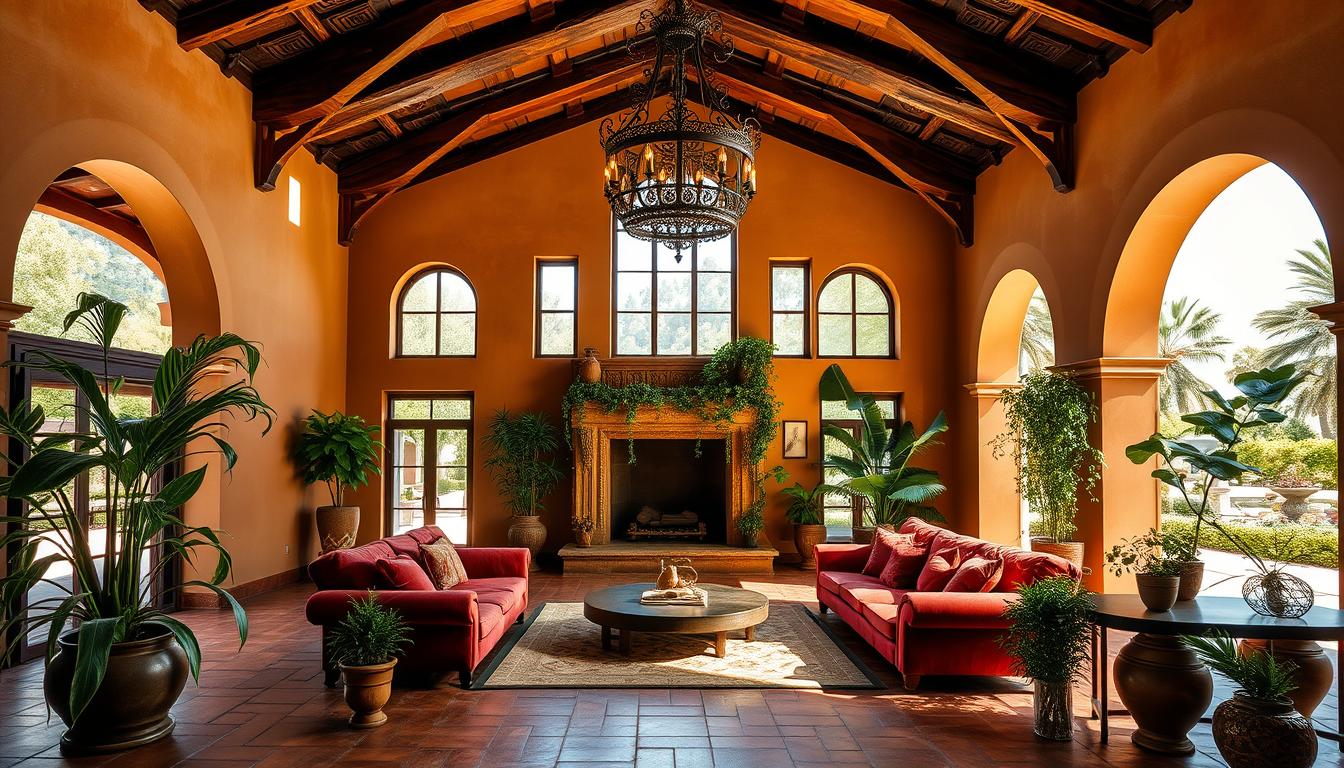
Spanish interiors feature arched doorways and windows, ornate tile work, and exposed wooden beams. These elements make spaces visually appealing and cozy.
Interior design experts say, “The use of arches and columns in Spanish interior design is a nod to the country’s Moorish heritage.”
‘The beauty of Spanish interior design lies in its ability to balance grandeur with intimacy.’
The use of natural materials like wood, stone, and clay tiles adds warmth and authenticity. These materials are often kept in their natural state to preserve their beauty.
Historical Influences on Spanish Interiors
Spain’s history is seen in its interior design, with different cultures influencing its styles. The Moorish influence is seen in intricate tile work and arches. The Gothic period is reflected in vaulted ceilings and ornate wood carvings.
The Mediterranean influence is also key, focusing on outdoor living spaces and natural materials. This mix of historical influences creates a unique and captivating style that is truly Spanish.
Color Palettes for Spanish Homes
The color palette is key in Spanish interior design. It shows the warmth and passion of Spanish culture. A good color scheme can make your home cozy and inviting, just like traditional Spanish interiors.
Warm Tones That Define Spanish Decor
Warm tones are central to Spanish decor. Colors like terracotta, golden hues, and earthy tones are common. These colors add warmth and make spaces feel cozy and comfortable.
“The use of terracotta and golden hues in Spanish homes is a testament to the country’s rich cultural heritage and its love for warm, inviting spaces.”
To use these warm tones in your home, try them on walls, furniture, and accessories.
For a modern Spanish home decor look, mix warm tones with neutral shades. This mix creates a beautiful and balanced atmosphere. Try different shades and combinations to find the perfect fit for your home. For more ideas, check out our page on elevating your home with Spanish interior.
Combining Bold and Muted Colors
Spanish interior design also combines bold and muted colors for a unique look. Bold colors like deep reds and blues make a statement. Muted colors like beige and soft grays add elegance and sophistication.
To mix bold and muted colors, find the right balance. Use bold colors for accent pieces like pillows, rugs, and wall art. Keep walls and furniture in muted tones. This way, you get a traditional Spanish home interiors look with a modern twist.
- Start with a neutral base: Use muted colors for the majority of your decor.
- Add bold accents: Incorporate bold colors through accent pieces.
- Balance is key: Ensure that your bold and muted colors are balanced to avoid overwhelming the space.
By following these tips and exploring different color palettes, you can create a Spanish home that’s both beautiful and welcoming. Whether you prefer traditional Spanish decor or modern Spanish design, the right color palette makes a big difference.
Key Materials in Spanish Interior Design
The beauty of contemporary Spanish home design shines through its use of natural materials. These materials make interiors warm and welcoming.
Choosing the right materials is key in Spanish-style home design. Wood, stone, and clay are essential. They bring authenticity and a sense of history to any space.
Natural Materials for Authenticity
Natural materials are at the heart of an authentic Spanish interior. Wood, like oak and walnut, is used for furniture and floors. It adds warmth and character.
Stone is also crucial, used in floors, walls, and fireplaces. It brings rustic elegance and keeps rooms cool in summer.
| Material | Common Uses | Benefits |
|---|---|---|
| Wood | Furniture, Flooring | Warmth, Character |
| Stone | Flooring, Walls, Fireplaces | Rustic Elegance, Thermal Mass |
| Clay | Pottery, Tiles | Authenticity, Versatility |
Emphasizing Textiles and Patterns
Textiles and patterns are also vital in Spanish style decorating. Rich fabrics like velvet, linen, and wool are used for upholstery and bedding. They add depth and interest.
Patterns, inspired by Moorish and Mediterranean designs, are used in tiles and rugs. They bring cultural heritage and create a lively atmosphere.
By mixing natural materials with textiles and patterns, homes become truly authentic. This approach reflects the beauty and warmth of Spanish design.
Furniture Styles that Embody Spanish Aesthetics
Creating a Spanish-style home starts with the right furniture. It brings warmth and beauty of Spanish culture into your space. Spanish interior design is rich, influenced by Moorish, Gothic, and Mediterranean styles.
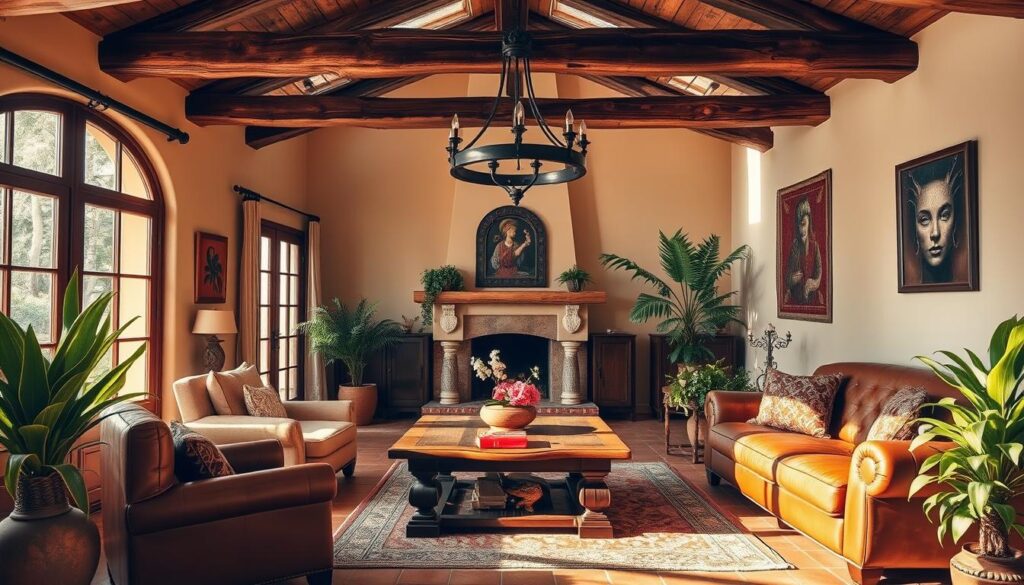
Furniture in a Spanish home reflects the country’s architectural heritage. Rustic wooden pieces, with intricate carvings, are common. Our guide on designing Spanish-style interiors shows how furniture shapes a room’s ambiance.
Rustic vs. Contemporary Spanish Furniture
Spanish furniture styles range from rustic to contemporary. Each style has its own charm. Rustic furniture has distressed wood and traditional craftsmanship.
Contemporary pieces mix modern designs with traditional elements. This creates a balance between old and new.
Rustic furniture keeps a traditional Spanish look. Contemporary pieces add modernity. Finding the right balance is key to reflecting your style.
Incorporating Antique Pieces
Adding antique pieces to your home adds depth and character. Vintage wooden chests or old doors as coffee tables can be focal points.
“Antique pieces are not just relics of the past; they are storytellers that bring history and warmth into our homes.”
When choosing antique furniture, look for pieces that show Spanish craftsmanship. Hand-carved wood or wrought iron details are typical. Thoughtfully adding these elements makes your home authentic and functional.
Lighting Techniques in Spanish Homes
To get the look of a Spanish home, mastering lighting is key. The right lighting makes a space warm and inviting, just like Spanish homes.
“Good lighting is not just about illumination; it’s about creating an ambiance that resonates with the soul of Spanish culture,” as echoed in the principles of Spanish interior design. Effective lighting can transform a space, making it feel more expansive and welcoming.
Using Natural Light to Enhance Space
Natural light is vital in Spanish home interiors. It lights up the space and shows off beautiful architectural details and rich textures. Use sheer curtains or blinds to let sunlight in while keeping privacy.
Place mirrors opposite windows to reflect natural light. This makes rooms with little natural light feel brighter and airier.
Selecting Fixtures for Authentic Spanish Vibes
Choosing the right lighting fixtures is important in Spanish interior design. Look for wrought iron, rustic wood, and intricate metalwork. Chandeliers and sconces with a rustic, aged finish can add authenticity to your Spanish-style home.
Use fixtures with warm-toned shades or candles for a cozy feel. The soft glow of candlelight adds warmth and intimacy, just like in traditional Spanish homes.
Key Lighting Fixtures for Spanish Homes:
- Wrought iron chandeliers
- Rustic wooden pendant lights
- Metalwork sconces
- Candle lanterns
By using these lighting techniques and fixtures, you can create a Spanish home interior that feels authentic and inviting. Whether you want to enhance natural light or add cozy ambiance, the right lighting makes a big difference.
Outdoor Spaces and Spanish Design
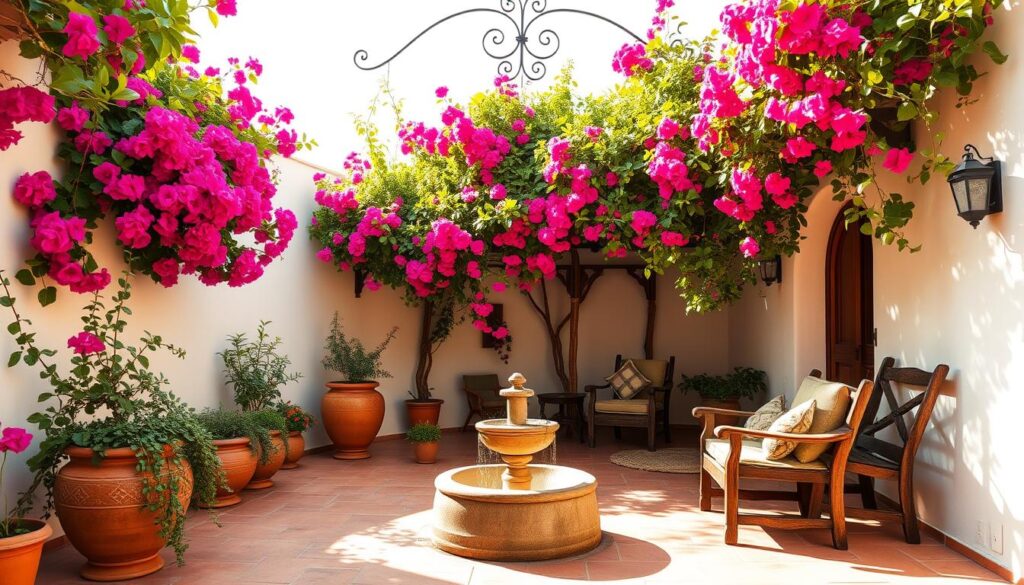
Spanish design is all about blending indoor and outdoor living. It makes homes feel bigger by letting people enjoy nature. This way, homes become one with the outdoors.
Merging Indoor and Outdoor Areas
Connecting indoor and outdoor spaces is a big deal in Spanish design. Large glass doors, courtyards, and patios help make this happen. They turn homes into open spaces that feel connected.
To blend indoor and outdoor areas well, think about these tips:
- Choose the same flooring for both spaces to make it feel like one area.
- Match your outdoor furniture with your indoor decor.
- Use lights that work for both inside and outside, like string lights.
Designing Spanish-Style Patios
Spanish patios are known for their bright tiles, fountains, and greenery. These features make the patio a calm and welcoming spot.
To make a Spanish-style patio, add these things:
- Tile Work: Bright tiles make your patio stand out and feel authentic.
- Fountains: A fountain adds a peaceful vibe to your patio.
- Lush Vegetation: Spanish plants like bougainvillea and lavender bring color and scent.
By adding these elements, you can make a patio that’s both beautiful and functional. It shows off the charm of Spanish design. Whether you’re into spanish decor ideas or modern spanish home decor, mix traditional with your own style.
Incorporating Art into Spanish Interiors
Art in Spanish interiors adds beauty and tells a story. It’s a big part of Spanish culture, with influences from many styles. In homes, art connects us to our heritage and history.
Traditional and Contemporary Spanish Art
Traditional Spanish art is known for its rich colors and emotional intensity. Famous artists like El Greco and Picasso are often featured. You can add traditional art with original pieces or reproductions.
Contemporary Spanish art keeps the tradition alive but also explores new ideas. Artists like Joan Miro and Salvador Dalí offer a modern twist. These pieces can make your home unique, blending old and new.
Using Decorative Tiles for Artistic Touches
Decorative tiles, or “azulejos,” are a key part of Spanish design. They’ve been used for centuries to decorate walls, floors, and ceilings. With many patterns and colors, they’re perfect for adding an artistic touch.
To use decorative tiles well, frame doorways or create accent walls. You can also design patterns on floors. The trick is to balance them with other design elements. Done right, tiles can make your home more beautiful and unique.
In conclusion, adding art to your Spanish interiors is a great way to make your space personal. Whether it’s traditional art, contemporary pieces, or decorative tiles, it brings Spanish culture to life. It also lets you tell your own story through your home.
Cultural Influences in Spanish Home Design
In Spanish home design, culture is key. It makes spaces beautiful and meaningful. Spanish culture is a mix of traditions, histories, and regional identities. These elements give Spanish interiors their unique character.
How Culture Shapes Interior Choices
Culture affects our home design choices. In Spain, we see this in the use of traditional materials and colors. For example, rustic Spanish home decor like wooden beams and terracotta tiles show the country’s love for authenticity.
Spanish homes often include local elements. Homes in different parts of Spain have unique styles and decorations. This diversity makes Spanish home design rich and varied.
Celebrating Regional Variations
Spain’s regions have their own design styles. From Moorish influences in the south to Celtic designs in the northwest, each region adds its own flair. These variations are key in shaping Spanish home interiors.
| Region | Characteristic Elements | Influence on Design |
|---|---|---|
| Andalusia | Moorish tiles, wooden latticework | Creates a sense of exotic elegance and historical depth |
| Catalonia | Modernist architecture, vibrant colors | Adds a touch of avant-garde sophistication |
| Castile and León | Rustic stonework, traditional textiles | Contributes to a warm, earthy feel |
By embracing these regional differences, we can create homes that are authentic and personal. Using local materials and traditional craftsmanship connects us to Spain’s rich culture. It makes our homes truly special.
Sustainable Practices in Spanish Home Design
The traditional Spanish home is changing, with a focus on sustainability. We love the beauty of Spanish interiors and making eco-friendly choices.
Eco-Friendly Materials and Products
Using eco-friendly materials is key in Spanish home design. We choose reclaimed wood, recycled metal, and sustainable textiles. These choices are good for the planet and add charm to our homes.
It’s important to think about where materials come from and how they’re made. Locally sourced materials cut down on carbon emissions. Also, durable materials mean less waste and fewer replacements.
Making Sustainable Choices in Design
Sustainable design is more than just picking green materials. It’s about the big picture. We aim for energy-efficient systems, lots of natural light, and healthy indoor spaces.
Adopting minimalist design helps too. We avoid clutter and pick furniture that’s both stylish and useful. This makes our homes better for the planet and more welcoming.
In mediterranean home interior styling and spanish home interior, going green is more than a trend. It’s about keeping true to Spanish values of simplicity and living in harmony with nature.
Personalizing Your Spanish Interior
Making your Spanish-style home your own is about mixing old traditions with your own style. This way, you can have a space that celebrates Spanish design and shows off your unique taste.
Adding Personal Touches and Decorations
Adding personal touches is a great way to make your Spanish interior special. You can use family treasures, art, or collectibles that mean something to you. For example, a vintage vase or handmade ceramic can bring authenticity and your own flair to your home.
When picking decorations, think about the look you want. For a Spanish home, choose items that match the warm colors and textures of this style. Adding traditional Spanish patterns on textiles like rugs and pillows can also make your space more interesting.
Creating a Comfortable and Inviting Space
Making your Spanish home cozy and welcoming is key. Choose furniture, lighting, and textiles that show off Spanish style but also feel comfortable and useful.
For example, soft sofas and chairs in velvet or leather can make cozy spots. Using warm lighting from lamps with detailed metalwork can also make your space feel more inviting. Plus, adding natural elements like wood beams or stone fireplaces can bring warmth and character to your home.
| Element | Description | Benefit |
|---|---|---|
| Textiles | Rugs, throw pillows, blankets in traditional Spanish patterns | Adds depth and visual interest |
| Furniture | Plush sofas, armchairs in rich fabrics | Creates cozy nooks for relaxation |
| Lighting | Table lamps, floor lamps with intricate metalwork | Enhances ambiance with warm lighting |
By carefully choosing these elements, you can make a Spanish home that’s not just beautiful but also comfortable and welcoming. The secret to great interior design is finding a balance between looks and function, making sure your space is both beautiful and practical.
Final Thoughts on Spanish Home Interiors
Exploring Spanish home interiors shows us a mix of old and new. By using modern Spanish home decor and traditional Spanish home interiors, you can make a space that looks great and feels good.
Nature-Inspired Design for Better Health
Spanish design loves natural light, fresh air, and being close to nature. This makes your home a place for calm and renewal. It makes your home look good and helps you stay healthy.
Transitional Spanish Interiors
We dream of blending old and new in Spanish interiors. This mix makes a welcoming space for those who love Spanish charm and modern simplicity. With natural materials, bright colors, and creative details, your home will feel both true to Spanish style and fresh.