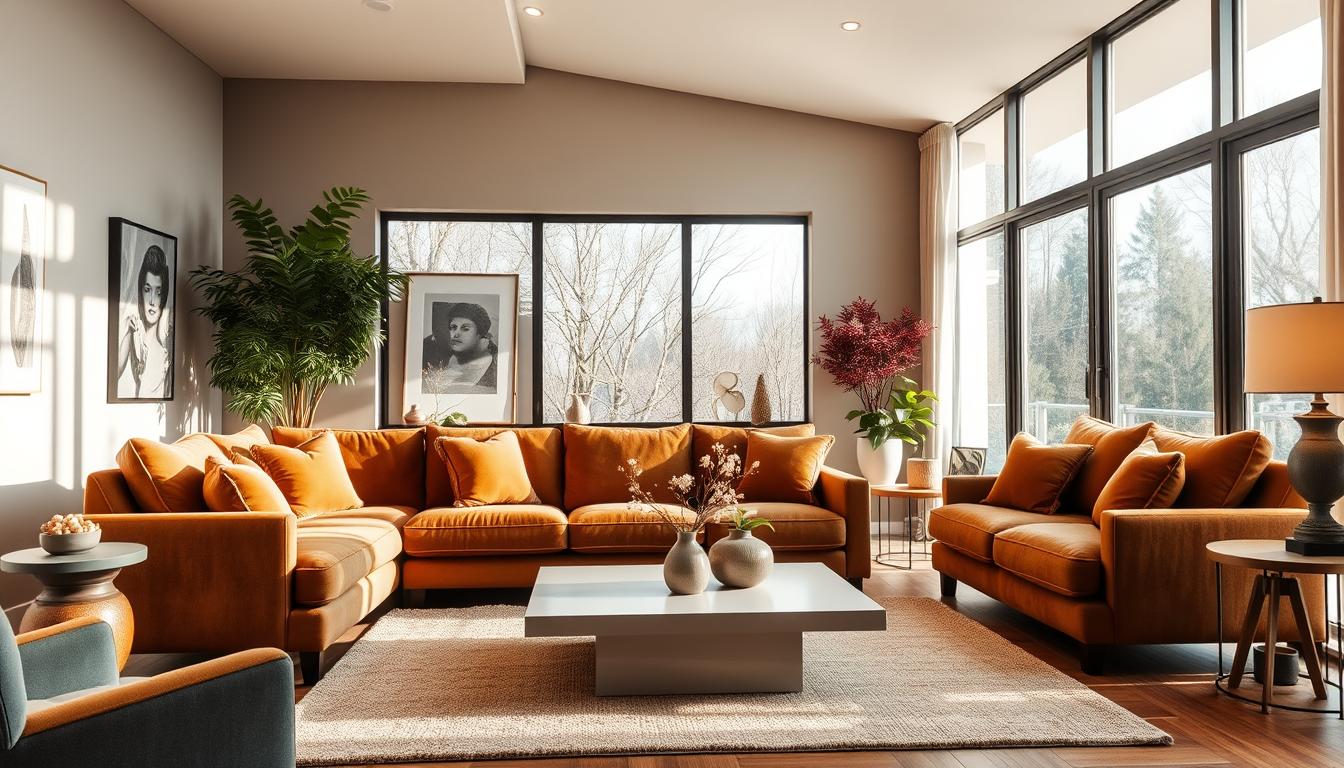


Living in a small home doesn’t mean you have to give up style or function. The right design strategies can make your living area feel spacious and welcoming.
Did you know that nearly 40% of homes in the United States are small, with less than 1,000 square feet? This trend shows we need effective interior design to make the most of our space.
We believe that good design can turn even the smallest spaces into a cozy retreat. In this article, we’ll share our best tips for making your small home look great and feel spacious.
Key Takeaways
- Maximizing vertical space to create a sense of openness
- Utilizing multi-functional furniture for efficiency
- Selecting a palette that enhances the feeling of spaciousness
- Implementing clever storage solutions
- Creating a seamless transition between living areas
Understanding the Challenges of Small Spaces
Small homes are charming but come with big design challenges. We must tackle these challenges carefully. It’s key to know the common problems and the perks of designing for small spaces.
Common Issues Faced
One big challenge is finding enough storage. Clutter can make a small home feel cramped. To solve this, using minimalist decor and furniture that does double duty is helpful.
Another problem is getting enough natural light. This can make rooms feel dark and tight. Using light-colored paints and mirrors can help brighten up the space.
Benefits of Designing for Small Homes
Designing for small homes has its advantages. For one, they need less upkeep and use less energy. With smart storage solutions, you can make the most of your space and stay organized.
Small homes also spark creativity in design. You can try out multifunctional furniture and smart layouts. This way, you can make your space both functional and beautiful.
Knowing the challenges and benefits helps homeowners design their small spaces better. It turns what could be limitations into chances for creativity and practical living.
Maximalist vs. Minimalist Design Approaches
In the world of apartment design, maximalist and minimalist styles are two main philosophies. They can greatly change how small homes look and feel.
It’s important for homeowners to know about these styles. This knowledge helps them use their space well. We’ll look at what each style is, its good points, and its downsides. This will help you choose the right style for your small home.
Defining the Styles
Maximalist Design loves luxury and richness. It uses many colors, patterns, and textures for a lively, layered look. Maximalist homes are full of decorations, bold art, and standout furniture.
Minimalist Design, on the other hand, values simplicity and clarity. It has clean lines, few decorations, and a simple color scheme. The goal is to be functional and calm, making a peaceful space.
Pros and Cons of Each
Maximalist and minimalist designs both have their ups and downs. Here’s a table to compare them:
| Design Style | Pros | Cons |
|---|---|---|
| Maximalist | Creates a unique and personalized space, allows for self-expression through various decorative elements. | Can make small spaces feel cluttered and overwhelming, may require more maintenance. |
| Minimalist | Promotes a sense of calm and serenity, makes spaces appear larger and more organized. | May feel too sterile or lacking in character, requires discipline to maintain minimal decor. |
Choosing between maximalist and minimalist design depends on your taste and lifestyle. Knowing the basics of each style helps you pick the best one. This choice will make your small home look great and show off your personality.
Choosing the Right Color Palette
Choosing the perfect color scheme is crucial for small homes. The right colors can make a room feel larger and more welcoming. They also help make the space feel highly personalized.
Light and Airy Colors
Light and airy colors are great for small homes. They make rooms feel open and bright. Shades like white, cream, and pale pastels can make spaces seem bigger.
These colors also reflect light, which means you might not need as many lights. This creates a more airy feel in your home.
To use light and airy colors, paint your walls with soft white or cream. Use pale-colored furniture and decor to keep the light feel. For example, a pale blue sofa or a pastel-colored rug can add color without overwhelming the space.
Accent Colors for Personality
While light colors make a room feel spacious, accent colors add personality. You can use furniture, decor, or accessories to introduce accent colors. For a small living room, a bold-colored throw pillow or vibrant artwork can add interest.
When picking accent colors, remember the 60-30-10 rule. 60% of the room should be a light color, 30% a secondary color, and 10% an accent color. This balance keeps the space harmonious and prevents it from feeling too much.
Using Dark Colors Wisely
Dark colors can add depth and coziness, but use them carefully in small spaces. Too much dark can make a room feel cramped. But, used as an accent or on one wall, dark colors can create a focal point and add interest.
For example, painting one wall in a deep, rich color can make a cozy nook. Dark-colored furniture or decor can also add contrast and make lighter elements pop.
| Color Scheme | Effect on Small Spaces | Tips for Implementation |
|---|---|---|
| Light and Airy | Makes rooms feel larger and more open | Use on walls, furniture, and decor; consider pale pastels and whites. |
| Accent Colors | Adds personality and depth | Introduce through throw pillows, artwork, or accessories; follow the 60-30-10 rule. |
| Dark Colors | Creates depth and coziness | Use on a single accent wall or through dark-colored furniture and decor. |
By carefully choosing and combining these color strategies, you can create a beautiful and functional space. Whether it’s a small living room or another area, the right color palette is key to achieving your design goals.
Multifunctional Furniture: A Game Changer
Living in small homes means always looking for ways to use space better. Multifunctional furniture is a big help. It makes small spaces feel bigger and more useful.
This type of furniture does more than save space. It helps keep our homes tidy and organized. By picking furniture that can change its use, we can make our living areas more functional without losing style or comfort.
Types of Multifunctional Furniture
There’s a wide range of multifunctional furniture out there. It meets different needs and fits various spaces. Here are some examples:
- Storage ottomans that double as seating and storage units
- Sofa beds that convert from a comfortable seating area to a sleeping space
- Nesting tables that can be stacked together when not in use, saving floor space
- Wall-mounted desks that fold up against the wall, ideal for small home offices
These items not only save space but also add flexibility to our homes. When picking multifunctional furniture, think about what you need and how your space is laid out. This ensures the furniture fits well with your lifestyle.
Clever Storage Solutions
Good storage is key in small homes. Clever storage ideas can really help. We can use bins, baskets, and shelves to keep things tidy and hidden.
Some smart storage ideas include using under-bed containers, installing floating shelves, and adding hidden spots in our furniture. This way, we can keep our homes clutter-free and feel more spacious and calm.
When setting up storage, think about how it will affect the flow and use of your space. Aim for a balance between storing things and keeping your home looking good.
By choosing multifunctional furniture and smart storage, we can make our living spaces more efficient and cozy. This improves our quality of life and makes our homes more enjoyable.
Smart Space Planning Techniques
Optimizing small spaces needs careful planning. We must think about how to use each area in a room. This helps make the space both functional and comfortable.
Creating Zones within a Room
Creating different zones in a room is a smart move. We can set up areas for reading, working, or dining. This way, we use the space better and make our homes more livable.
- Use furniture placement to define different zones.
- Employ rugs and lighting to differentiate areas visually.
- Consider the use of room dividers or curtains to separate zones when needed.
Importance of Flow and Functionality
It’s important to have a smooth flow between zones. We should plan the layout to make moving around easy. This helps avoid clutter and makes the space feel bigger.
- Keeping pathways clear and unobstructed.
- Positioning furniture in a way that guides the eye and facilitates movement.
- Utilizing multifunctional furniture to reduce clutter and enhance the sense of space.
By using these smart planning techniques, we can make small homes feel bigger and more welcoming.
The Power of Mirrors in Small Rooms
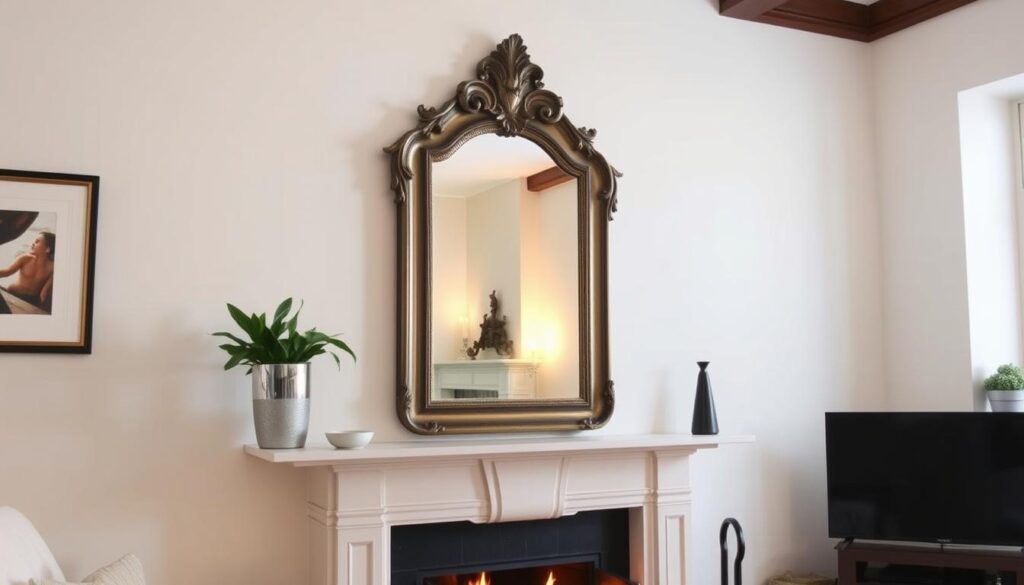
Mirrors can change a small room’s look, making it seem bigger and more elegant. They can turn a tight, messy space into a light, open room. This makes the room feel larger than it actually is.
Types of Mirrors to Consider
Not all mirrors are the same, and the right one can really make a difference. Large wall mirrors are popular because they make a room look bigger by reflecting it. Mirrored furniture is also great, as it offers storage and displays while adding to the room’s feel.
Other mirrors to think about are mirrored console tables and mirrored closet doors. They add style and make the room feel bigger.
Strategic Placement Tips
Where you put mirrors is key to making a room seem larger. Place mirrors opposite windows to reflect light and make the room brighter. Also, put a mirror opposite a doorway to reflect the area outside, making the room seem bigger.
Think about the mirror’s height too. Hanging a mirror above furniture, like a sofa or console table, can make the room feel bigger and more connected.
Vertical Design Elements
In small homes, going vertical is key, not just a trend. It boosts both function and looks in tight spaces.
Vertical storage is a big help. Tall shelves, for example, offer lots of storage without taking up floor space. This makes rooms feel more open.
Utilizing Vertical Storage Solutions
Vertical storage does more than hold things; it keeps spaces tidy. Tall bookshelves and storage units that reach the ceiling are perfect for small homes.
- Use wall-mounted cabinets for kitchen tools and ingredients.
- Install tall shelving in living areas for books and decor.
- Choose storage beds with drawers or shelves.
Creative Use of Wall Space
Using wall space creatively is vital in vertical design. Wall-mounted furniture and decor add personality without cluttering the floor.
Wall-mounted desks, shelves, and art pieces turn plain walls into functional, eye-catching parts of the room.
- Hang a wall-mounted desk in a small office to save space.
- Float shelves to display items and keep floors clear.
- Add wall art for color and texture.
Embracing vertical design makes small homes feel bigger, more organized, and more beautiful.
Lighting Strategies for Small Homes
Lighting is key in making small homes look good and work well. The right lighting can make a room seem bigger and more welcoming. We’ll look at how to mix light sources and pick the best fixtures for small homes. This will help you get the most out of your space, inspired by apartment and small house designs.
Layering Different Light Sources
Using different light sources is a basic lighting design trick. It means combining various lights to make a space look good and work well. There are three main types: ambient, task, and accent lighting.
- Ambient Lighting: Gives the room a general glow, making it seem bigger.
- Task Lighting: Focuses on areas where you do things, like reading or cooking.
- Accent Lighting: Shows off special features, like artwork or decorations, adding depth.
By mixing these light types, you can make your small home feel welcoming and balanced.
Choosing the Right Fixtures
Picking the right lighting fixtures is important for both looks and function. The right fixture can really change how a room feels and looks.
| Fixture Type | Best Use | Style Tip |
|---|---|---|
| Recessed Lighting | General illumination, creating a sense of space | Use in rooms with low ceilings to maintain a clean look |
| Table Lamps | Task lighting, adding warmth and coziness | Choose lamps that complement your decor and provide the right amount of light |
| Floor Lamps | Task and ambient lighting, filling dark corners | Select lamps with adjustable arms for flexibility |
By picking the right fixtures and mixing light sources, you can make your small home feel bigger and more inviting.
Decluttering: A Vital Step
Decluttering is more than tidying up. It’s key to making the most of small homes. By getting rid of things we don’t need, we make our space more useful and beautiful.
Decluttering helps us get rid of stress and focus better. A clean space makes life better, helping us relax and enjoy our homes more.
Benefits of Minimalism
Minimalism is not just a trend; it’s a way of life. It’s about living simply and with purpose. Here are some benefits:
- Reduced Stress: Too much stuff can make us feel overwhelmed. Less stuff means a calmer home.
- Improved Focus: Without clutter, we can focus better. This helps us do what’s important, like work or spending time with family.
- Enhanced Creativity: With fewer distractions, we can be more creative. We can explore new ideas and interests.
Regular Decluttering Practices
To keep your home clutter-free, regular cleaning is key. Here are some tips to help:
- Schedule Regular Decluttering Sessions: Make time each week or month to sort through your stuff and get rid of what you don’t need.
- Start Small: Begin with one area or room at a time. This helps avoid feeling too overwhelmed.
- Be Intentional: Think carefully before buying new things. Ask if they match your values and if you really need them.
By following these decluttering tips, you can keep your home clean and welcoming. It will feel more functional and enjoyable.
Personalizing Your Small Space
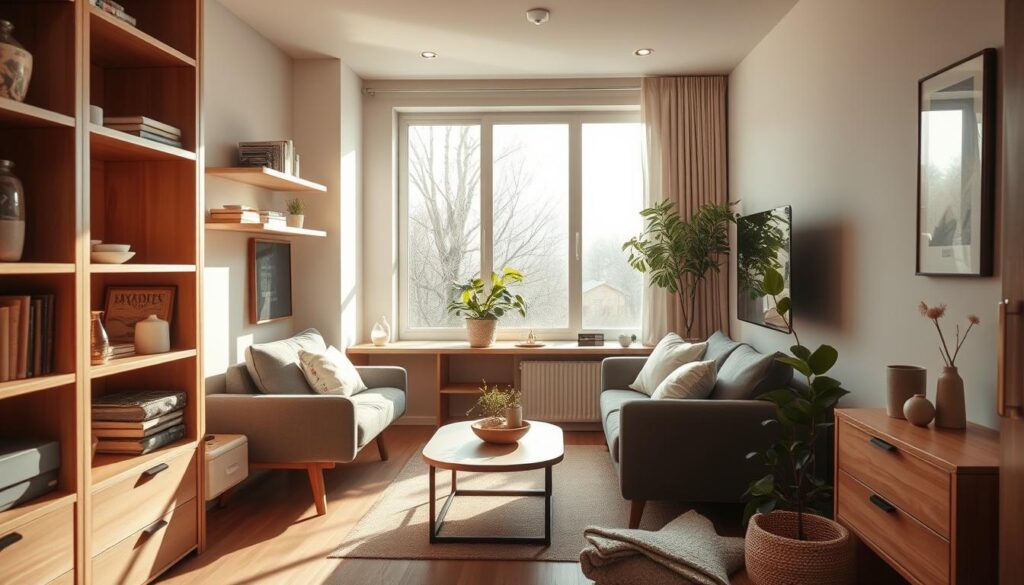
Making a small home feel personalized is more than just decorating. It’s about creating a space that shows your personality. When we personalize our living spaces, they become not just pretty but also meaningful.
Showcasing Art and Personal Items
One great way to personalize your small home is by showing off art and personal items. These add character and warmth. Think about displaying personal collections, family heirlooms, or artwork that speaks to you.
This makes your space feel more welcoming and shows your identity.
Mixing Styles and Textures
Mixing different styles and textures is another effective way to personalize your home. Combining modern furniture with vintage pieces or blending wood, metal, and fabric adds depth and interest. This lets you show off your personal taste and create a unique space.
By using these ideas, you can turn your living room into a cozy, inviting space. Decorating a small living room is about making choices that reflect your personality and style.
Outdoor Spaces: Extending Your Home
Maximizing your outdoor area can make your small home feel more spacious. We often focus on the interior of small homes. But, outdoor spaces offer a great chance to expand our living areas. By designing these spaces well, we can improve our living experience.
Creating a Cozy Balcony or Patio
Turning a balcony or patio into a cozy spot is more than just adding furniture. We must think about the ambiance and function. For example, outdoor lighting can greatly improve the mood, making it welcoming and cozy. Adding plants and comfy seating can also make a small balcony a peaceful retreat.
To make a balcony or patio cozy, consider these elements:
- Comfortable outdoor furniture
- Plants and greenery
- Soft lighting
- Textiles such as throw pillows and blankets
For more ideas on home design, check out our favorite home interior design ideas page. It’s full of tips on making beautiful living spaces.
Indoor-Outdoor Flow Techniques
Making a smooth transition between indoor and outdoor spaces can make your home feel bigger. Using the same flooring materials indoors and outdoors is a good start. Also, big sliding glass doors or bi-fold doors can blend the two areas well.
| Technique | Description | Benefit |
|---|---|---|
| Similar Flooring | Using the same or similar flooring materials indoors and outdoors | Creates a sense of continuity and flow |
| Large Glass Doors | Installing large sliding or bi-fold glass doors | Enhances the connection between indoors and outdoors |
| Consistent Decor | Using a consistent decor theme indoors and outdoors | Creates a harmonious and expansive feel |
By using these strategies, we can extend our living spaces. This makes small homes feel more spacious and connected to the outdoors.
Implementing Smart Technology
As we make our small homes better, smart tech is key. It boosts both function and ease. With smart tech, we can use space wisely and keep things tidy.
Automated Storage Systems
Automated storage systems are a great example of smart storage. They use wall units and hidden spots to keep things neat and hidden.
Smart shelving is also a smart choice for small homes. It adjusts itself with sensors, making the most of our space. This way, we can reach our stuff easily.
Smart tech helps us live better in small spaces. It makes our homes more organized and fun to be in.