

More people work from home than ever before. Having a productive workspace is key to success. A well-designed space can improve your efficiency, creativity, and job happiness.
Creating a functional and efficient workspace at home needs careful planning. It’s not just about setting up a desk and chair. It’s about making a space that boosts your productivity and comfort.
We’ll show you how to design a productive home office that fits your needs. By focusing on lighting, ergonomics, and organization, you can make a space that helps you work better.
Key Takeaways
- Understand the importance of a well-designed workspace.
- Learn how to optimize your workspace for productivity.
- Discover key elements that contribute to a functional workspace.
- Implement tips to enhance your work performance at home.
- Create a comfortable and ergonomic working environment.
Understanding the Importance of a Home Office Interior
More people work from home now, making a well-designed home office interior key. A home office is more than a place to work. It affects our productivity, creativity, and well-being.
Why a Dedicated Space Matters
A dedicated home office space is vital for work-life balance. It reduces distractions and interruptions, helping us focus better. It also lets us “clock out” and leave work behind, which is good for our health.
A study found a well-designed home office can boost productivity by up to 20%. This is because a dedicated space helps us stay organized and avoid clutter.
“A cluttered space leads to a cluttered mind. Organizing your workspace is essential for clearing your thoughts and improving focus.”
How Environment Impacts Productivity
The environment of our home office greatly affects our productivity. Things like lighting, noise levels, and ergonomics can help or hurt our work efficiency. For example, natural light improves mood and energy, and a good chair prevents fatigue.
| Environmental Factor | Impact on Productivity |
|---|---|
| Natural Light | Boosts mood and energy |
| Ergonomic Furniture | Prevents fatigue and discomfort |
| Noise Levels | Can either distract or enhance focus |
Understanding the role of a home office interior in productivity helps us create a better space. Using home office layout ideas that promote comfort and efficiency is crucial for a productive work environment.
Choosing the Right Location for Your Home Office
Finding the perfect spot for your home office is key to a productive workspace. We’ll look at what to consider for a location that boosts efficiency and comfort.
Factors to Consider
Several factors are important when picking a home office location. Natural light is crucial as it improves mood and focus. Think about your home’s layout and window directions to get the most light. Also, consider the modern home office decor to make your space look good.
Noise Levels and Distractions
Noise and distractions are big deals. A quiet area is best for staying focused. If you live with others, think about the noise during work hours. Reducing distractions helps keep you productive.
| Factor | Ideal Condition | Impact on Productivity |
|---|---|---|
| Natural Light | Adequate sunlight | Boosts mood and energy |
| Noise Level | Quiet or minimal background noise | Enhances focus |
| Distractions | Minimal to none | Improves concentration |
In summary, picking the right spot for your home office needs careful thought. Look at natural light, noise, and distractions. A spot with less distraction and more comfort helps you meet your work goals.
Essential Elements of Home Office Design
Creating a good home office is more than just a desk in a quiet spot. It needs careful design for better productivity. There are key elements to think about when setting it up.
A Functional Desk Setup
A good desk setup is key for a productive home office. This means not just the desk, but how it’s organized too. Adding creative home office organization ideas, like desk organizers and cable management, boosts efficiency.
Using a standing desk can help your posture and prevent back pain. Make sure your desk is at a comfy height and has room for your computer, papers, and more.
Ergonomic Furniture Choices
Picking the right furniture is vital for a comfy and healthy work space. Stylish home office furniture should be both good-looking and functional. An ergonomic chair, for example, supports your back, helping you stay in good posture.
Think about your home office’s size and your work type when choosing furniture. For example, a comfy chair with lumbar support is key if you talk a lot on the phone.
Lighting Considerations
Lighting is also key in home office design. Good lighting reduces eye strain and boosts your mood. Natural light is best, so place your desk near a window if you can. But, high-quality LED lamps or task lighting work well when natural light isn’t available.
Consider the color temperature of your lighting too. Cool white light is great for tasks, while warm white light makes your space cozy.
Creating a Motivating Atmosphere
Your home office should be more than just a place to work. It should be a space that motivates you to be creative. A well-designed office can boost your productivity and job happiness.
Personalizing Your Workspace
Make your workspace motivating by adding personal touches. This could be family photos, artwork, or collectibles that show your personality. Minimalist home office inspiration also comes from simple, clean designs that help you stay focused.
- Displaying personal items such as awards or mementos
- Incorporating plants or a vase with fresh flowers
- Using a colorful rug or statement lighting fixture
Incorporating Inspirational Decor
Adding inspirational decor to your office can boost your motivation and creativity. This could be motivational quotes, vision boards, or inspiring images. The goal is to create a space that encourages you to reach your goals.
Some popular ideas for inspirational decor include:
- Creating a gallery wall with motivational quotes or images
- Using a vision board to visualize your goals
- Incorporating natural elements such as a bowl of river rocks or a vase with branches
By personalizing your space and adding inspirational decor, you can make a motivating atmosphere. This can improve your productivity and job satisfaction.
Maximizing Space in Small Areas
Small spaces don’t have to limit your home office potential. With the right strategies, you can create a highly functional workspace. It’s key to optimize every inch to keep productivity and comfort high.
One of the main challenges in designing a small home office is keeping it clutter-free and organized. This is where smart storage solutions play a big role. Clever storage options help keep your workspace tidy and focused.
Smart Storage Solutions
Effective storage is vital in small home offices. Use wall-mounted shelves, compact filing cabinets, and hidden storage to keep things organized. Using vertical space can greatly improve your home office’s functionality without taking up floor space.
- Install shelves or bookcases that go up to the ceiling to maximize storage.
- Use under-desk storage units or drawers to keep essential documents within easy reach.
- Invest in multi-functional furniture pieces that have built-in storage, such as ottomans or storage cubes.
Along with storage, the right furniture is crucial in a small home office. Multi-functional furniture is designed to serve more than one purpose. It helps reduce clutter and boosts efficiency.
Multi-Functional Furniture
Choosing the right furniture for your home office can be a game-changer. Look for pieces that can serve multiple purposes, like a desk with built-in shelving or a convertible sofa. This approach saves space and adds versatility to your workspace.
By implementing these strategies, you can turn even the smallest space into a productive and comfortable home office. The key is to plan your space wisely and choose furniture and storage that fits your work style.
Technology and Equipment for Efficiency
Remote work has become common, making the right tech and tools for your home office crucial. We’ll look at the key tech and equipment for an efficient home office.
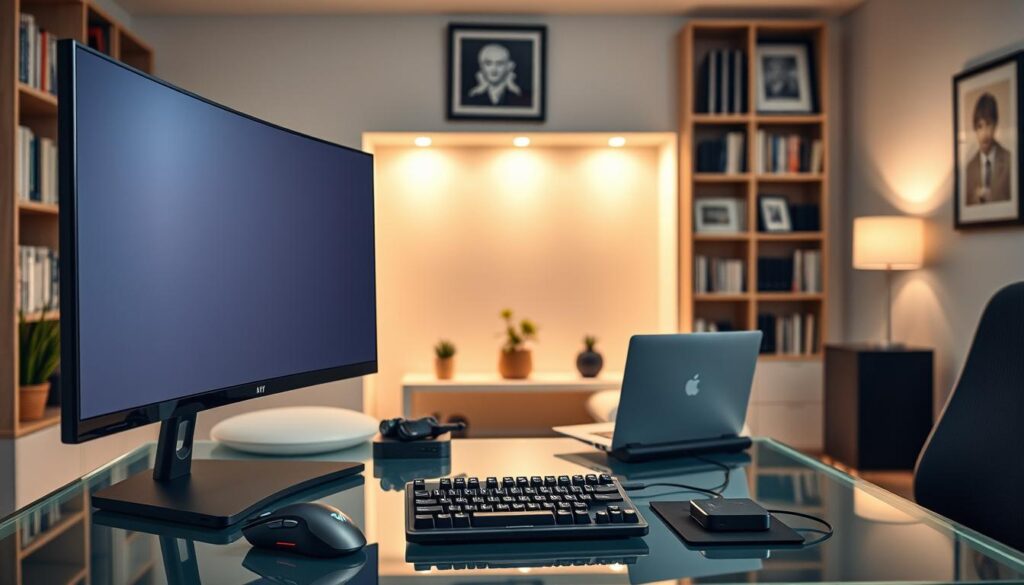
Choosing the right gadgets and software is key to being productive. A fast computer or laptop is essential. Also, noise-cancelling headphones help block distractions and keep you focused.
Must-Have Gadgets
Here are some gadgets you need for a home office:
- A reliable printer and scanner
- A high-quality webcam for video calls
- A comfy wireless keyboard and mouse
- A smartphone with a good camera for work on the go
For more tips on setting up your home office, see our article on designing the perfect home office.
Best Software for Productivity
There are many software tools to boost your productivity. Here are some top ones:
| Software | Description | Benefits |
|---|---|---|
| Project Management Tools (e.g., Trello, Asana) | Organizes tasks and projects | Improves team work and task handling |
| Time Tracking Software (e.g., Toggl, Harvest) | Tracks time on tasks and projects | Better time use and accurate billing |
| Communication Tools (e.g., Slack, Zoom) | Makes team talk and meetings easier | Less email and better live chat |
Productivity expert Laura Vanderkam says, “The key to productivity is not about working more, but working smarter.” The right tech and software can make your home office more efficient.
“The key to productivity is not about working more, but working smarter.” – Laura Vanderkam
In summary, a good home office needs the right tech, gadgets, and software. With these tools, you can make your work flow better and be more productive.
Color Psychology in Designing Your Home Office
Color psychology is crucial in home office design. It affects how you feel and work. The colors you pick can greatly influence your productivity, creativity, and well-being.
Selecting the Perfect Hue
Choosing the right color palette for your home office is key. Different colors have different psychological effects. For example, blue promotes calmness and focus, making it great for tasks that need concentration.
Green, on the other hand, boosts creativity and balance. It’s perfect for brainstorming sessions.
Here’s a breakdown of popular colors and their effects:
| Color | Effect |
|---|---|
| Blue | Promotes calmness and focus |
| Green | Enhances creativity and balance |
| Yellow | Boosts energy and optimism |
Accent Colors for Inspiration
Accent colors can make your home office unique and inspire creativity. Think about the mood you want to create. For a modern look, bold colors like orange or red can energize the space.
You can use accent colors in furniture, rugs, or decorations. A colorful rug can brighten the room. Artwork can introduce new hues and interest.
By choosing colors wisely and adding accent colors, your home office can reflect your style. It can also boost your productivity and creativity. Don’t forget to use home office lighting tips to highlight your color choices.
Establishing Boundaries Between Work and Home
It’s key to keep work and personal life separate for your well-being. Having a home office can make it hard to stop working. This can lead to burnout or feeling like you’re always working.
To solve this, create a dedicated workspace. Use stylish home office furniture that boosts your productivity and creativity.
Setting Up a Work Schedule
Setting a strict work schedule helps set boundaries. Work hours should be like those in an office. This helps you stay focused and avoid burnout.
- Choose work hours that match when you’re most productive.
- Take regular breaks to recharge.
- Have a routine to mark the end of your workday.
This approach makes it clear when you’re working and when you’re not. It boosts your productivity and keeps you from burning out.
Tips for Maintaining Focus
Staying focused at home can be tough without an office. But, there are ways to stay on track.
- Make your workspace quiet and dedicated.
- Use tools and software to stay organized.
- Set boundaries with family and friends to protect your worktime.
These tips help you stay productive and make working from home successful and sustainable.
To improve your work-from-home life, add elements that boost well-being and productivity. Think about ergonomic furniture and inspiring decor. 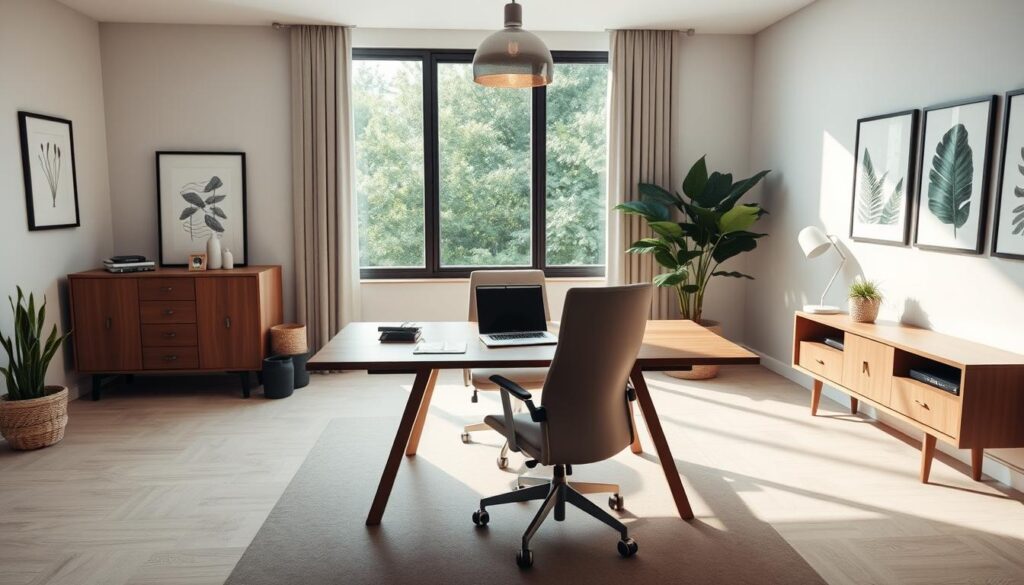
Incorporating Nature into Your Workspace
Nature greatly improves our well-being. Adding it to our home office makes our space more inspiring and productive. This brings the outdoors into our work area.
Benefits of Indoor Plants
Indoor plants are not just pretty; they clean the air and make our office feel better. Spider plants, snake plants, and peace lilies are great choices. They need little care and grow well in different light.
Plants also lift our mood and cut down stress. Studies show they lower blood pressure and improve air quality. This makes our work space healthier.
Natural Light and Its Effects
Natural light is key for a productive office. It boosts our mood, energy, and work quality. We should place our desk near a window for more light.
Natural light also affects our mental health. It helps our body clock, leading to better sleep and mental health.
To add more nature, use wood, stone, and bamboo in our decor. These materials bring nature into our office and help the environment.
Tips for Maintaining a Clutter-Free Office
Keeping your home office tidy is key to staying productive. A clean workspace helps you focus and reach your goals. To do this, you need good organizing strategies and regular cleaning routines.
Effective Workspace Organization
To keep your office neat, try creative ways to organize. Use filing cabinets and shelves to store important papers and supplies. Also, arrange your desk and chair for better ergonomics and less distraction.
Regular Decluttering for a Productive Environment
Decluttering regularly is vital for a tidy office. Set aside time to clean out unnecessary items, dust, and dirt. This makes your workspace more productive and helps you stay focused.
By following these tips, you can have a clean and organized home office. This will boost your productivity and make your work experience better.