
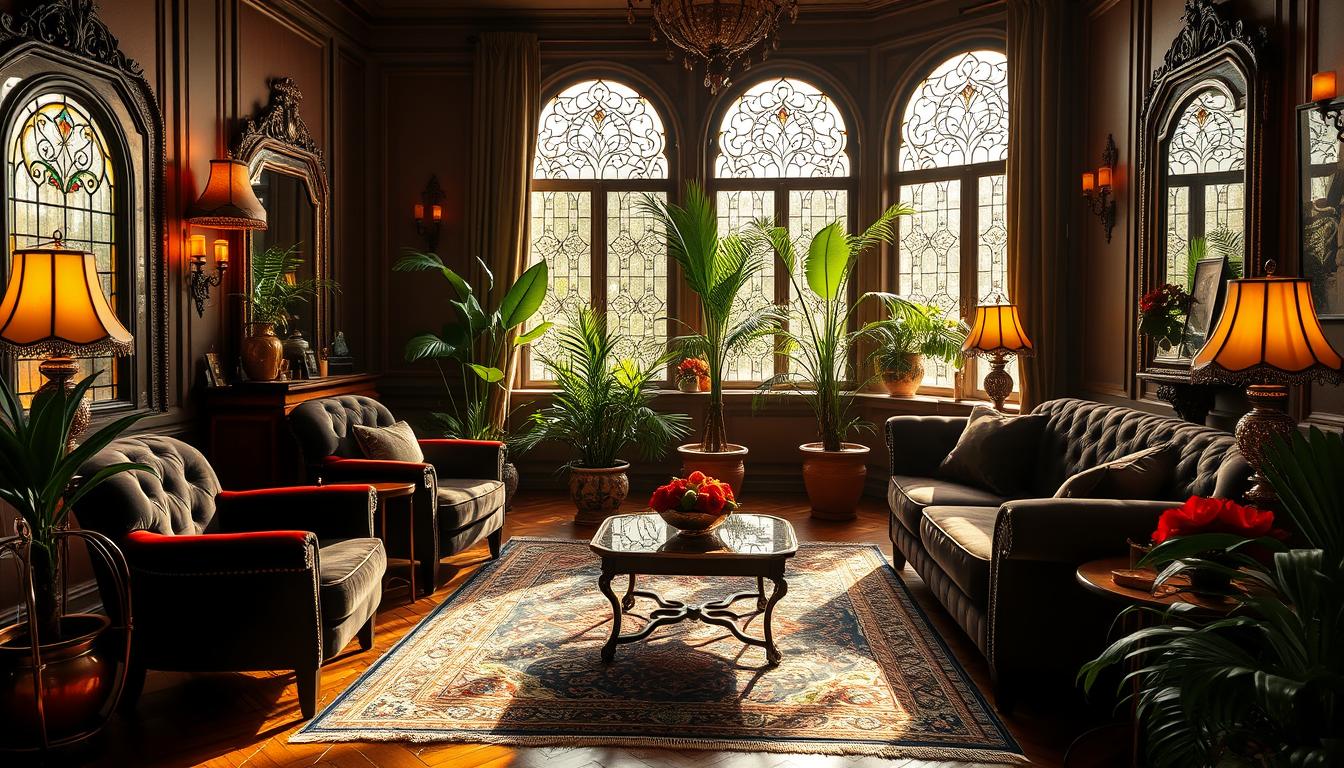
The Roaring Twenties are back in style, and vintage home decor is making a big comeback in home design. Many people want to bring the luxury and glamour of the past into their homes.
In this guide, we’ll look at what makes 1920s interiors special. We’ll give you tips to decorate your space with the elegance of that era. We’ll cover everything from fancy furnishings to bold colors, helping you add a bit of history to your life.
Key Takeaways
- Understanding the historical context of 1920s decor
- Identifying key elements of vintage home decor
- Applying historical interior design principles to modern spaces
- Selecting furniture and accessories that evoke the era
- Creating a cohesive look that blends past and present
Understanding the Aesthetic of 1920s Home Interiors
The 1920s home interiors were shaped by many influences. The decade saw big changes in culture, economy, and technology. These changes deeply affected home design.
Key Influences on 1920s Design
The Art Deco style was a big influence in the 1920s. It used geometric shapes, metallics, and ornate decoration. Art Deco added luxury and modernity to homes.
The era also saw a rise in retro home furnishings. These featured bold colors, unique patterns, and a mix of old and new. This mix created a unique look for 1920s homes.
Notable Architectural Styles of the Era
The 1920s favored various architectural styles. Period-specific furniture reflected the era’s history and culture. Styles like Colonial Revival, Tudor Revival, and Spanish Colonial Revival were popular.
These styles didn’t just affect the outside of homes. They also influenced interior design. Homes often used specific materials like oak and walnut. Traditional craftsmanship was also common.
Popular Color Palettes of the 1920s
The 1920s were all about bold colors in home interiors. This era celebrated being daring and creative. People showed this through their home decor.
The color palettes of the 1920s were diverse and vibrant. They mixed bright colors with neutral tones. Vibrant colors made statements, while neutrals brought balance.
Vibrant Hues for Walls and Accents
The 1920s were bold in their color choices. Walls were painted in deep colors like emerald green and navy blue. Accents added pops of color through furniture and decor.
“The use of bold colors in the 1920s was not just about aesthetics; it was also a reflection of the era’s cultural and social changes.”
Some top vibrant hues included:
- Deep reds and burgundies
- Rich greens and blues
- Golden yellows and oranges
https://www.youtube.com/watch?v=ZnKaAADtJss
The Role of Neutrals in 1920s Decor
Neutrals were key in 1920s decor, alongside vibrant colors. Beige, cream, and ivory balanced out the bold colors. They brought calm to the space.
Neutrals also let people add patterned textiles and decorative accessories. This added depth and interest to the room.
By mixing vibrant colors with neutrals, homes in the 1920s were stylish and functional.
Essential Furniture Styles from the 1920s
The 1920s was a time of big change in furniture design. It saw the rise of unique styles that still shape our homes today. Let’s look at what made this era’s furniture so special.
Art Deco Furniture Features
Art Deco furniture is a standout from the 1920s. It’s known for its luxury and geometric shapes. Key features include:
- Bold geometric shapes and metallic materials
- Inlaid wood and exotic veneers
- Ornate decoration, often with an Egyptian or Asian influence
Art Deco furniture is all about glamour and modernity. When choosing period-specific furniture, look for pieces that show these traits. They’ll bring the 1920s vibe to your home.
Mission and Arts & Crafts Influence
On the other hand, Mission and Arts & Crafts furniture is more understated. It focuses on simplicity and handcraftsmanship. Characteristics of these styles include:
- Simple, clean lines and minimal ornamentation
- An emphasis on handcrafted quality and the natural beauty of wood
- Functionality and comfort, reflecting a more practical approach to furniture design
These styles were different from Art Deco but still popular in the 1920s. They offer a contrast that adds variety to your decor. Adding antique home accessories from these movements can make your space richer.
By mixing these styles, we can create a space that celebrates the 1920s while also showing our own style.
Iconic Textiles and Patterns
In the 1920s, textiles and patterns were key in making homes look unique. The fabrics and designs showed the luxury of the time. They helped shape the look of homes.
Fabric Choices for 1920s Homes
The 1920s loved luxurious fabrics like silk, velvet, and satin. These were used for furniture, drapes, and decor. The right fabric made a room feel grand and classy.
- Silk and velvet were favorites for their rich feel and look.
- Satin and smooth fabrics added shine, making rooms feel more lavish.
- Cotton and linen were used for casual or country-style decor.
Popular Patterns: From Geometric to Floral
Patterns in the 1920s varied, from geometric to floral. These were found on fabrics, wallpapers, and more.
Geometric patterns, inspired by Art Deco, were big hits. They included shapes like chevrons and hexagons. On the other hand, floral patterns brought elegance, perfect for traditional or feminine spaces.
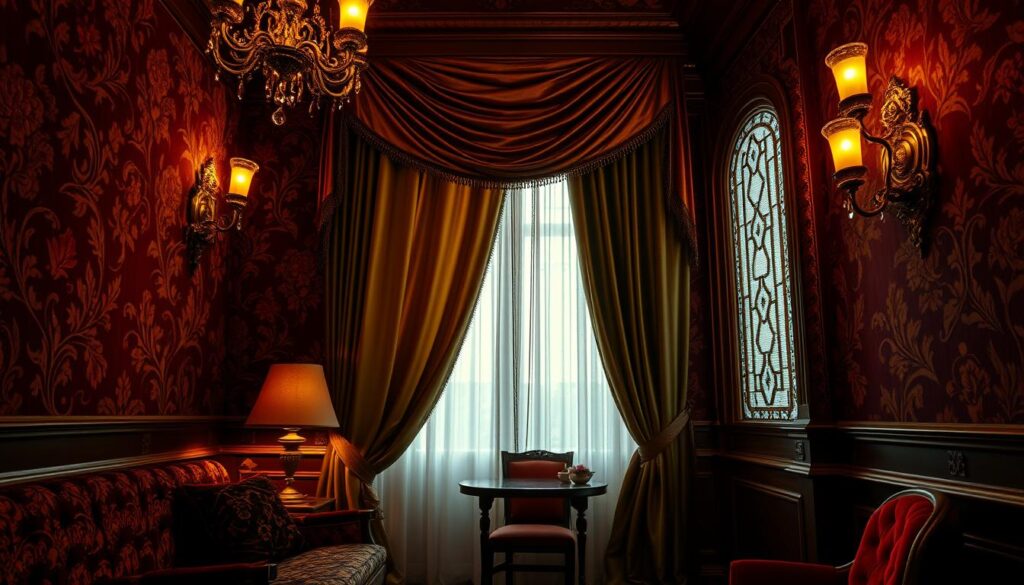
To bring these iconic textiles and patterns into your home, try these tips:
- Use vintage or vintage-inspired fabrics for furniture and drapes.
- Add geometric and floral patterns with wallpaper, rugs, or throw pillows.
- Blend luxurious materials like velvet and satin with casual ones for a balanced look.
By embracing 1920s textiles and patterns, you can add Gatsby-era charm to your home. This creates a unique and captivating space.
Lighting Trends in 1920s Interiors
Exploring 1920s interior design shows us that lighting was key. It wasn’t just about light; it was a statement of style. It showed the luxury of the Roaring Twenties.
Chandeliers and Statement Fixtures
Chandeliers were a big deal in 1920s homes. They had detailed designs and were made from materials like crystal and bronze. These fixtures were not just lights; they were art pieces that made rooms look grand.
Art Deco influence was clear in chandeliers. They had geometric shapes, metallics, and bold designs. The use of exotic materials and motifs made them even more luxurious.
The Rise of Novelty Lighting
The 1920s also brought novelty lighting. It was all about creativity and new ideas. Table lamps, floor lamps, and sconces became more than just lights. They were decorative pieces with different materials and designs.
| Type of Lighting | Characteristics | Notable Features |
|---|---|---|
| Chandeliers | Intricate designs, luxurious materials | Crystal drops, metallic frames |
| Table Lamps | Decorative bases, unique shades | Geometric patterns, colorful glass |
| Sconces | Ornate designs, often wall-mounted | Metallic finishes, decorative motifs |
In conclusion, 1920s interiors were all about luxury, innovation, and art. Understanding these trends helps us appreciate the era’s design. It also lets us bring a piece of that style into our homes.
Incorporating Vintage Accessories
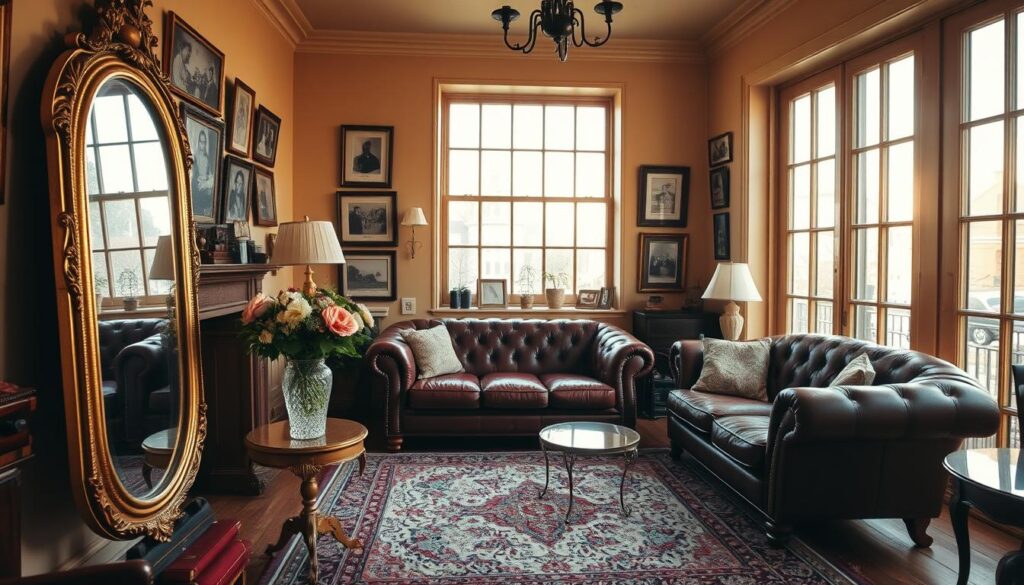
To truly capture the essence of the Roaring Twenties, incorporating vintage accessories is a must. These unique pieces add character to your home. They also serve as a tangible connection to the past. When done correctly, vintage accessories can elevate your 1920s-inspired decor from mere reproduction to a rich, lived-in experience.
Authentic 1920s Decor Items
Authentic 1920s decor items are highly prized for their craftsmanship and historical significance. Look for pieces that reflect the era’s design sensibilities. This includes Art Deco patterns, geometric shapes, and luxurious materials. Some highly sought-after items include vintage posters, antique furniture, and original 1920s lighting fixtures.
When shopping for authentic vintage items, it’s essential to inspect them carefully for signs of aging and wear. Restoration can be a part of the charm, but be wary of pieces that have been overly restored or are reproductions.
Finding and Collecting Vintage Pieces
Finding vintage pieces requires patience and a keen eye. Start by exploring local antique shops, estate sales, and vintage markets. Online marketplaces can also be a treasure trove, but be sure to verify the authenticity and condition of items before making a purchase.
When collecting vintage pieces, consider the overall aesthetic you wish to achieve. Mixing and matching different items can create a unique and captivating decor. Don’t be afraid to combine vintage finds with reproductions or modern pieces to add depth and interest to your space.
By incorporating vintage accessories thoughtfully, you can create a home that not only honors the style of the 1920s but also reflects your personal taste and style.
The Role of Art in 1920s Home Design
In the 1920s, art and home design became more connected. This change showed the cultural and social shifts of the time. Homeowners started to see the value of beauty in their homes.
Famous Artists and Their Impact
The 1920s saw the rise of many famous artists. Their work greatly influenced home design. Artists like Jean Dupas and Tamara de Lempicka created stunning pieces that showed the era’s modern and glamorous side.
These artists’ work shaped the look of 1920s homes. Their influence was seen in wallpaper designs and decorative items.
Incorporating Art into Your Space
To bring the 1920s home design into your space, choose art that fits the era’s style. Here are some tips:
- Look for art that matches the Art Deco style, with its geometric patterns, metallics, and bold colors.
- Choose pieces by artists from that time or modern works that honor the era’s look.
- Use art to highlight a room, like a big piece above a fireplace or a set of prints on a wall.
When picking art, think about your home’s color and style. Make sure the art fits well with your decor.
| Artistic Style | Characteristics | Application in Home Design |
|---|---|---|
| Art Deco | Geometric patterns, metallic materials, bold colors | Use in statement pieces, decorative items, and wallpaper |
| Cubism | Abstract forms, multiple perspectives | Apply in abstract art pieces, sculptures, and unique decorative items |
| Surrealism | Dream-like imagery, unusual juxtapositions | Incorporate through unusual art pieces, eclectic decor, and imaginative textiles |
By carefully choosing art for your home, you can make a space that celebrates the 1920s. It also shows off your own style.
Designing Functional Spaces for Today
Creating a 1920s home interior is all about finding a balance. We want to keep the elegance of the Roaring Twenties. But, we also need to make these spaces work for today’s lifestyle.
One big challenge is adding modern conveniences without losing the vintage feel. We can hide modern appliances or choose vintage-style ones that fit right in.
Modern Utilities in Vintage Settings
To mix modern utilities with a 1920s home, try these ideas:
- Choose appliances that look like they’re from the 1920s.
- Use cabinetry or paneling to hide modern fixtures.
- Find lighting that looks old but works with today’s bulbs.
For example, a 1920s kitchen can have modern appliances that look like they belong there. This way, we get today’s tech without losing the charm of our home.
| Modern Utility | Vintage Integration Method | Design Benefit |
|---|---|---|
| Refrigerator | Paneling to match cabinetry | Maintains the visual flow of the kitchen |
| Lighting Fixtures | Vintage-style lamps with modern bulbs | Blends modern functionality with period aesthetic |
| Kitchen Appliances | Retro-designed appliances | Adds to the vintage ambiance while providing modern convenience |
Blending Old and New Style Elements
Mixing old and new in a home needs careful thought. We want to keep the vintage charm while adding modern comforts. This might mean combining antique furniture with modern pieces or using old materials with new textures.
For instance, a vintage sofa with a modern coffee table creates a cool contrast. Traditional hardwood floors with modern rugs add beauty and comfort.
By balancing old and new, we can make a space that’s both unique and practical. It honors the 1920s while meeting today’s needs.
The Importance of Layouts and Flow
The 1920s home interior is more than looks; it’s about making spaces functional and welcoming. The layout and flow were key in defining the living experience of that era.
In the 1920s, designers focused on making spaces open and inviting. This was a big change from the more divided homes of earlier times. It brought a modern and airy feel to homes.
Creating Open and Inviting Spaces
To make spaces feel open, designers used big doorways and fewer separate rooms. They also added large windows for more natural light. These changes made homes feel bigger and fostered a sense of community.
If you want to master interior home styles from the 1920s, knowing about layout is crucial. It’s not just about the look but also about the design philosophy of that era.
Historical Layouts That Still Work Today
Many 1920s layouts are still useful today because they were designed for comfort and function. For example, central hallways and the placement of big rooms like living and dining areas were smart choices. These ideas still make sense today.
| Layout Feature | 1920s Design | Modern Relevance |
|---|---|---|
| Open Floor Plans | Emerging trend, for living areas | Still popular today, encourages interaction |
| Large Windows | Maximized natural light | Still valued today for energy and ambiance |
| Central Hallways | Common for organizing homes | Still a practical element in design |
By understanding and using these historical layout principles, homeowners can create spaces that are beautiful and true to the art deco style. These spaces will also be functional and comfortable for today’s living.
Easy DIY Projects for 1920s Decor
DIY projects are a great way to add vintage charm to your home. By doing a few simple tasks, you can turn your space into a Roaring Twenties haven. It will be filled with antique accessories that tell stories.
Start with projects that give new life to old pieces. Restoring vintage furniture is affordable and lets you add your personal touch. It’s a fun way to decorate.
Restoring Vintage Furniture
Restoring furniture involves cleaning, stripping, and applying new finishes. First, check the piece’s condition to see how much work it needs. For items with detailed carvings, use gentle cleaning to keep the original look.
To get an authentic 1920s look, try replicating traditional finishes like lacquer or shellac. This boosts the piece’s vintage charm and makes it last longer.
Crafting Your Own Accessories
Creating your own accessories is another great way to add 1920s style. You can make items like vintage-inspired lampshades, ornate frames, or handmade textiles with geometric patterns.
Use materials like fabric, wood, metal, and glass for your crafts. For example, making a lamp with a vintage base and a new shade is rewarding. Try different textures and materials to make your creations unique and authentic.
Doing these DIY projects adds a personal touch to your decor. They also honor the opulent style of the 1920s. Whether it’s a restored armchair or a handmade vase, your efforts will make your home rich in character and charm.
Conclusion: Embracing 1920s Style in Our Homes
The 1920s home interiors are full of charm and elegance. The Gatsby-era design, with its opulence, still fascinates us today. The art deco style, known for its geometric patterns and luxurious materials, is a timeless choice. It adds a vintage glamour to any living space.
Timeless Appeal of 1920s Decor
To get a 1920s-inspired look, use statement pieces like vintage furniture and ornate lighting. Pair these with neutral colors to avoid feeling too much. This balance keeps your space elegant and inviting.
Modern Twists on Classic Design
Mixing old and new styles creates a unique and welcoming home. Try combining vintage accessories with modern gadgets for a perfect blend. Embracing the 1920s style brings sophistication and elegance to your home.