
Did you know that the average tiny home is about 186 square feet?
With the rise of minimalist living, making the most of small spaces is key. We dive into the world of small space design, where creativity and function meet.
At its heart, tiny home living is about using every inch wisely. We’ll share tips and ideas to help you make your tiny home interior both functional and stylish.
Key Takeaways
- Maximizing storage in small spaces
- Utilizing multi-functional furniture
- Creating the illusion of more space
- Selecting the right color palette
- Optimizing natural light
Understanding the Unique Appeal of Tiny Homes
Tiny homes are gaining popularity for their mix of minimalism and practicality. They offer more than just downsizing; they promote a lifestyle that values simplicity and efficiency.
The appeal of tiny homes lies in their minimalist home decor. By keeping only the essentials, we create a space that’s both clean and beautiful. This approach sparks creativity and turns limited space into a chance for innovative design.
What Draws Us to Minimalism?
Minimalism is more than a design style; it’s a lifestyle that values simplicity and purpose. It helps us create a more organized and efficient home. This shift towards minimalism lets us focus on what’s truly important and live more intentionally.
The Environmental Benefits of Going Tiny
The tiny home movement is also about caring for the environment. By choosing compact living ideas, we can cut down on energy use and waste. Tiny homes are built to be efficient, using fewer resources and supporting a sustainable lifestyle.
Living in tiny homes also means consuming less and wasting less. This shift towards sustainability is a big part of their appeal. It attracts people who want to lessen their impact on the planet.
Clever Storage Solutions for Tiny Spaces
In tiny homes, every inch is precious. Finding the right storage solutions is key to keeping things tidy. With a bit of creativity, even the smallest spaces can be both functional and stylish.
Using multi-functional furniture is a smart move. It does more than one thing, adding storage or utility.
Multi-Functional Furniture: A Game Changer
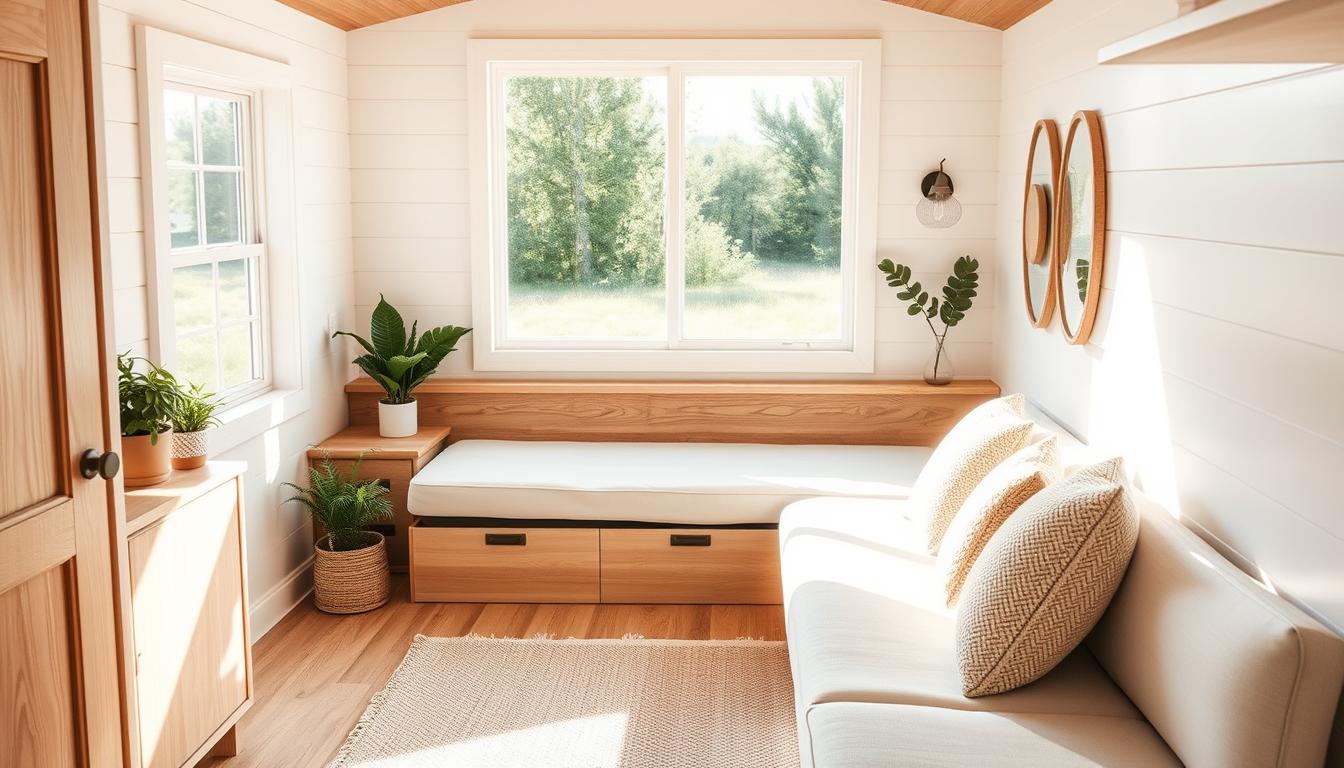
Multi-functional furniture is essential for tiny home design. Items like storage ottomans, beds with drawers, and coffee tables with storage can cut down on clutter. For example, a storage ottoman can be a footrest, extra seat, and storage for linens or toys.
Here are some examples of multi-functional furniture:
- Storage beds
- Foldable tables and chairs
- Nesting tables
- Wall-mounted desks
Utilizing Vertical Space Effectively
Using vertical space is another way to maximize storage in tiny homes. Shelves, storage units, or hanging organizers on ceilings or walls keep floors clear. They also make items easy to reach.
For example, hanging shoe organizers on a door can store shoes, accessories, or cleaning supplies. This keeps them organized and out of the way.
Hidden Storage Techniques
Hidden storage keeps tiny homes looking tidy. It uses hidden compartments, secret drawers, or storage disguised as other features.
For instance, a staircase can have drawers or compartments under each step. This is a clever storage solution that looks good too.
| Storage Solution | Description | Benefits |
|---|---|---|
| Multi-functional Furniture | Furniture that serves more than one purpose | Reduces clutter, increases functionality |
| Vertical Storage | Utilizing wall space for storage | Keeps floors clear, maximizes space |
| Hidden Storage | Concealing storage in plain sight | Maintains aesthetic appeal, reduces visible clutter |
Dieter Rams once said, “Less but better.” This is true for tiny home storage. By focusing on simplicity, functionality, and clever design, we can create beautiful and efficient living spaces.
“The way you organize your space can significantly impact your quality of life.”
Design Tips for a Cozy and Functional Layout
A well-designed tiny home can feel surprisingly spacious and inviting. We achieve this by incorporating several key design elements. These elements work together to create a cozy and functional living space.
Open Floor Plans: Maximizing Space
One of the most effective ways to make the most of a tiny home’s limited square footage is by adopting an open floor plan. This design approach eliminates unnecessary walls and partitions. It creates a sense of openness and fluidity.
For example, combining the living room, kitchen, and dining area into one open space not only enhances the sense of spaciousness. It also improves functionality. It allows for easier interaction between family members and guests, making the home feel more connected and communal.
Defining Areas with Rugs and Furniture
While open floor plans are beneficial for creating a sense of space, it’s also important to define different areas within the home. We use rugs and furniture to delineate these spaces without resorting to walls. For instance, a rug can clearly mark the boundary between a living area and a dining space.
Furniture selection is also critical. Choosing multi-functional pieces, such as a storage ottoman or a sofa bed, can help define different areas while serving more than one purpose. This approach not only saves space but also adds to the overall functionality of the home.
Creating Flow with Color and Light
Color and light play a significant role in creating a sense of flow and continuity in tiny homes. By using a consistent color palette throughout the home, we can visually tie different areas together. This makes the space feel more cohesive.
Lighting can greatly impact the ambiance and perceived size of a tiny home. We recommend using a combination of overhead lighting, table lamps, and floor lamps to create a layered lighting effect. This not only enhances the visual appeal but also helps in creating a cozy atmosphere. For more insights on tiny home interior design, you can visit our comprehensive guide at our guide to tiny home interior.
Integrating Technology into Tiny Home Interiors
Adding technology to tiny homes changes how we live, making our spaces better. As we move to tiny homes, it’s key to see how tech can improve our lives.
Smart home devices are a big step forward in tiny home tech. They help us in many ways, like controlling lights and keeping our homes safe. For example, smart thermostats learn our preferences and save energy.
Smart Home Devices for Small Spaces
Smart home devices are great for tiny homes because they’re small and do lots of things. Some top picks include:
- Voice assistants like Amazon Alexa or Google Home that control our home.
- Smart lighting that changes color and brightness based on the time or what we’re doing.
- Small smart home hubs that connect many devices, making our tiny home easier to manage.
For more tips on smart home design, check out our guide. It has lots of useful advice.
Energy Efficiency through Innovation
Being energy-efficient is key in tiny homes. New tech like solar panels and smart energy systems help us use less energy. For instance, solar panels on our roof can power our home, and smart monitors help us keep an eye on our energy use.
“The future of tiny homes lies in their ability to be both sustainable and technologically advanced.” – Expert in Sustainable Living
By using these technologies, we make our tiny homes more comfy and green. This helps us live better and helps the planet too.
Choosing the Right Color Palette for Tiny Homes
The right color palette can greatly impact a tiny home’s feel. It’s not just about looks; it also affects how we see the space. Choosing colors wisely is key for small spaces.
Light vs. Dark: Finding the Perfect Balance
Choosing between light and dark colors is a big decision for tiny homes. Light colors make rooms feel bigger and more inviting. They reflect light and open up the space. On the other hand, dark colors can make a space cozy and rich but need careful use to avoid making it feel cramped.
“The key to a successful color scheme in a tiny home is balance,” says a renowned interior designer. “By combining light and dark elements, we can create a visually appealing space that feels both spacious and intimate.”
To find this balance, use light colors on walls and ceilings. This adds height and openness. Then, use darker shades in furniture and decor to add depth and character.
Accent Walls to Add Depth
Accent walls are great for adding depth and personality to tiny homes. A bold or darker color on one wall creates a focal point. It draws the eye and adds interest.
- Select a wall that naturally draws attention, such as the one behind a fireplace or a piece of art.
- Choose a color that complements the existing palette but adds a pop of contrast.
- Consider the psychological impact of the color: for example, blue can be calming, while red can be energizing.
By carefully adding accent walls, we can make our tiny home more appealing. It creates a sense of layering that makes the space feel more dynamic.
Personalizing Our Tiny Home Aesthetic
Tiny homes are perfect for showing off our style. We can display art and make DIY decor. Our goal is to make our tiny house feel like home, with elements that show our personality and are practical.
Living in a tiny home means we can surround ourselves with meaningful items. Art and personal items add character. We can hang photos, artwork, or vintage plates on walls.
Displaying Art and Personal Items
Displaying personal items can be creative. Shadow boxes are great for sentimental objects. Floating shelves offer a minimalist look for our favorite pieces.
DIY decor makes our tiny home special. It adds a personal touch and lets us get creative. We love making throw pillows, wall art from reclaimed wood, and macramé plant hangers.
DIY Decor Ideas for a Unique Touch
Adding greenery is easy with upcycled planters. It’s eco-friendly and adds whimsy. We also use vintage scarves or fabric remnants for unique table runners or wall hangings.
| DIY Project | Materials Needed | Skill Level |
|---|---|---|
| Decorative Throw Pillows | Fabric, Pillow Insert, Sewing Machine | Beginner |
| Reclaimed Wood Wall Art | Reclaimed Wood, Nails, Hammer | Intermediate |
| Macramé Plant Hanger | Cotton Rope, Wooden Dowels, Scissors | Advanced |
With these personal touches and DIY decor, our tiny home becomes a warm, inviting space. It truly feels like our own.
Kitchen Design Ideas for Tiny Homes
Tiny home kitchens need to use space wisely. We’re excited to share some smart kitchen design ideas. Every choice, from appliances to storage, matters in a small space.
One big challenge is making kitchens both beautiful and functional. We want our kitchens to look great and work well. That’s why compact living ideas are key, helping us use every inch wisely.
Space-Saving Appliances We Love
Choosing the right appliances is crucial for a tiny home kitchen. We look for compact, multi-functional appliances. For example, a microwave-toaster oven combo saves space and keeps cooking options open.
- Compact dishwashers that fit under the counter
- Induction cooktops for efficient heating
- Refrigerators with built-in freezer compartments
These appliances save space and make kitchen tasks easier. They help keep the kitchen workflow smooth, even in small areas.
Open Shelving vs. Cabinetry
The choice between open shelving and cabinetry is important in kitchen design. Open shelving makes kitchens feel bigger and items easier to reach. But, it can get cluttered if not kept tidy.
Cabinetry, on the other hand, keeps things hidden and organized. Yet, it can make the space feel smaller. We suggest mixing both: use open shelving for items you use often and cabinetry for less-used items.
This approach helps create a kitchen that’s both useful and looks good. It shows the best of compact living ideas.
Making the Most of Our Outdoor Living Areas
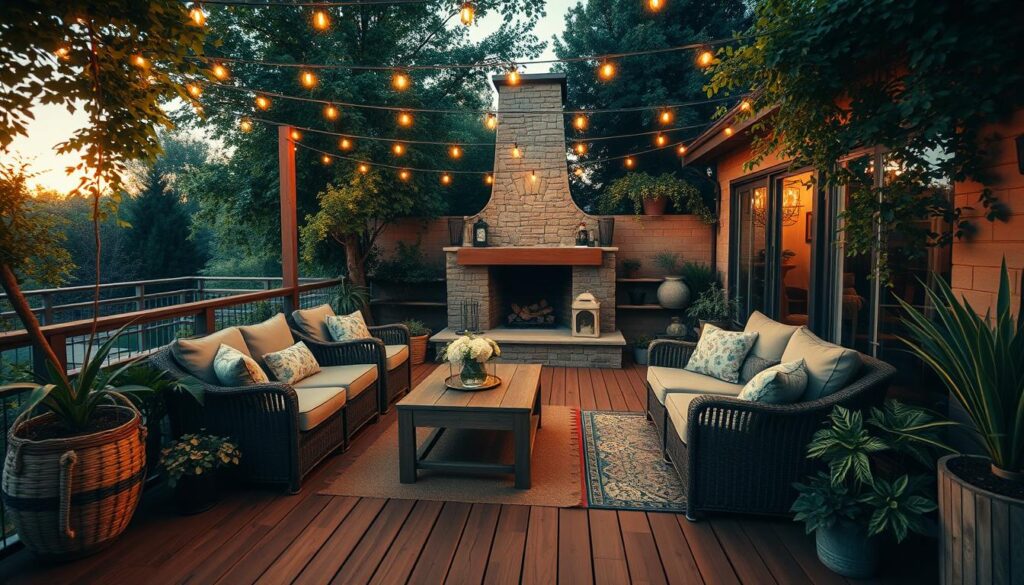
Outdoor living spaces are more than just an extra part of our tiny homes. They are a key part of our living area. By using these spaces well, we can make our homes feel bigger and more welcoming.
Expanding Interior Space with Outdoor Solutions
One great way to use our outdoor areas is to make our indoor space bigger. We can do this with smart design choices, like:
- Creating an outdoor room that feels just as cozy as our indoor spaces.
- Choosing outdoor furniture that looks good and lasts long.
- Adding things like fire pits or outdoor kitchens to make the space more useful.
This way, we get more living space and a smooth transition between inside and outside. Our tiny homes then feel more spacious.
Creating a Relaxing Patio or Balcony Space
A well-designed patio or balcony can be a peaceful escape. To make it perfect for relaxing, think about:
- Picking furniture that’s comfy and can handle the weather.
- Adding plants and greenery to bring in nature.
- Using lights to make the space warm and welcoming at night.
As House Beautiful points out, a great outdoor space is just as crucial as the inside. By focusing on a relaxing and useful outdoor area, we can greatly improve our tiny home living.
The secret to enjoying our outdoor spaces is in careful design and blending indoors and outdoors. This way, we can live a more spacious, calm, and rewarding life in our tiny homes.
Bathroom Innovations in Tiny Homes
Compact fixtures are essential for efficient bathroom design in tiny homes. They help create spaces that are both functional and comfortable.
Compact Fixtures for Efficiency
Compact fixtures save space without losing functionality. Wall-mounted sinks and toilets are great because they free up floor space. This makes the bathroom feel bigger.
Combo units, like shower and toilet combos, are also smart. They save space and make the design simpler, leading to a more streamlined look.
Smart Storage Ideas for Small Bathrooms
Storage is key in tiny home bathrooms. We suggest using vertical space with tall, narrow cabinets or shelves. These can hold essentials without taking up too much floor space.
Hidden storage is another smart move. Recessed medicine cabinets or hidden compartments behind mirrors offer plenty of storage without cluttering the bathroom.
- Use baskets or bins to organize small items.
- Install shelves or cabinets above the toilet for more storage.
- Consider a folding or retractable drying rack to save space.
By using these bathroom innovations, we can make our tiny home bathrooms more spacious and functional.
Sustainability in Tiny Home Interiors
Living in a tiny home means we must focus on being green. We choose eco-friendly materials and practices. This way, we reduce our impact on the environment while keeping our homes cozy and useful.
Green Building Materials
We use materials like reclaimed wood, bamboo, and low-VOC paints. These choices make our homes healthier and cut down on waste. They also add a special touch to our tiny homes.
Practical Tips for Sustainable Living
To live sustainably in our tiny homes, we aim to use less energy and water. We also try to waste less. Simple actions like using energy-saving gadgets, composting, and finding new uses for old things help a lot.
By choosing sustainable living and using eco-friendly materials, we make our tiny homes better for the planet. This approach helps us live in a more responsible and eco-friendly way.